



Dry, Itchy Skin, and Rashes… Warning Signs of “Atopic Dermatitis” and How to Prevent Flare-Ups
Dry, itchy skin and body rashes may seem like common issues, especially during dry weather or seasonal changes. However, if these symptoms recur along with spreading rashes, or become chronic and unresponsive to standard care, it might not be just ordinary dry skin. It could be a sign of a condition known as “Atopic Dermatitis” This condition is common in children, but adults can also develop it, especially those with a history of allergies such as asthma or allergic rhinitis. If neglected or not properly managed, the condition can worsen and disrupt your daily life more than you might expect.
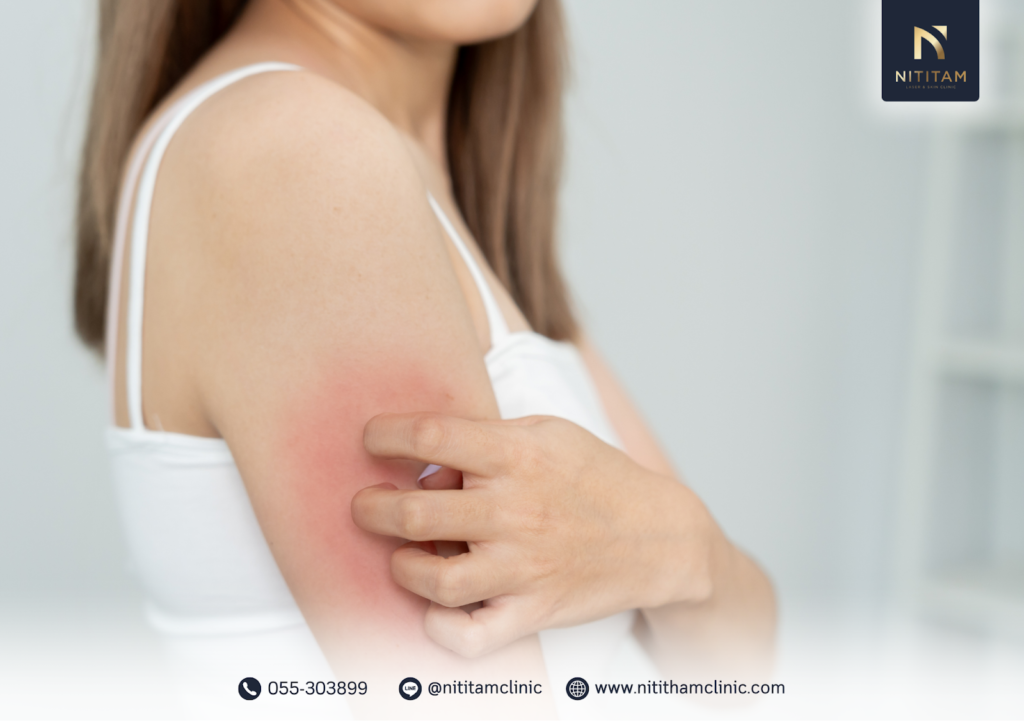
A Deeper Understanding of Atopic Dermatitis
Atopic dermatitis is a chronic condition caused by an abnormality in the natural skin barrier, making the skin prone to moisture loss and highly sensitive to various triggers such as weather changes, chemicals, or even stress. When the skin barrier is compromised, it leads to long-term inflammation, resulting in dryness, itching, and red rashes. This condition tends to flare up and subside periodically, often worsening during seasonal changes.
Signs That You May Have Atopic Dermatitis
Individuals with this condition often experience severe symptoms during childhood, which may improve as they grow older. However, a significant number of adults develop symptoms for the first time during their working years, which can easily be mistaken for normal dry skin.
- Dry, rough, and flaky skin, especially around the skin folds, arms, legs, or back.
- Severe itching, particularly at night or after showering.
- Red rashes or clear fluid-filled blisters on the skin.
- Rashes that frequently recur in the same areas.
- Scratching may lead to wounds or dark spots.
- In some cases, chronic scratching may cause the skin to thicken.
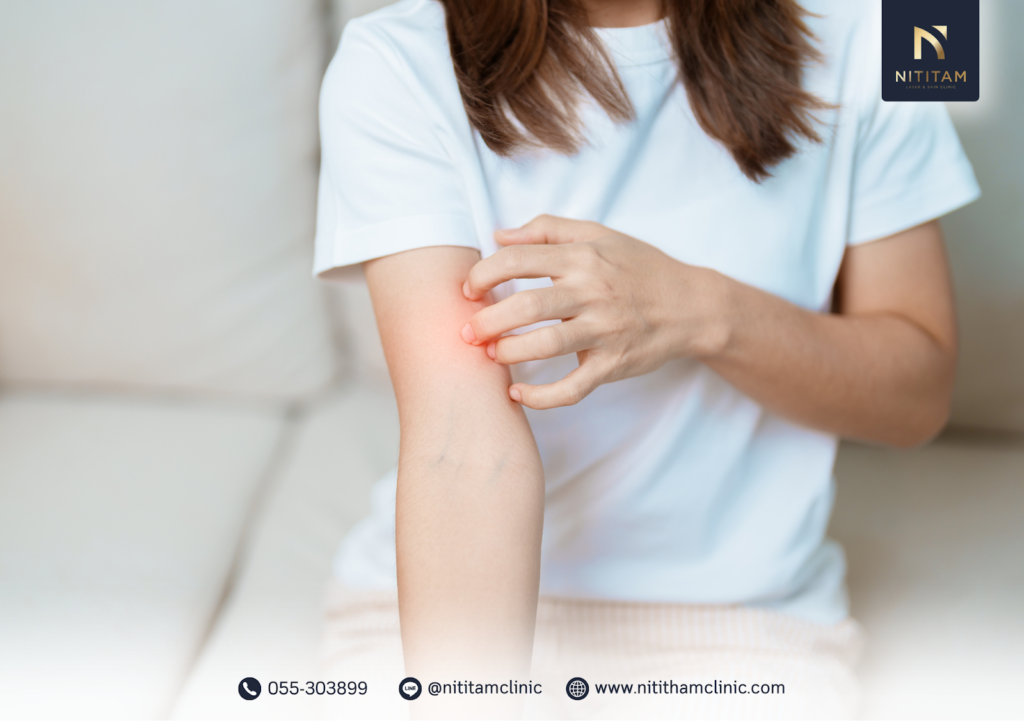
Causes of flare-ups
Atopic dermatitis is caused by a combination of several factors, including:
- Genetics
Individuals with parents or siblings who have allergies have a higher risk of developing this condition.
- Weakened skin barrier
Resulting in moisture loss and making the skin more prone to inflammation.
- Environment
Dry, cold air, or pollution can trigger flare-ups.
- Irritants
Such as laundry detergents, highly foaming soaps, or fragranced products.
- Emotional factors
Stress and anxiety can contribute to worsening symptoms.
- Microorganisms
In some cases, the rash may become infected with bacteria or yeast, leading to more severe inflammation.
Diagnosis and Initial Care
If you experience symptoms of atopic dermatitis, it is recommended to consult a doctor for an accurate diagnosis. The doctor will evaluate the appearance and location of the rash, along with your family history. In cases of complications, additional tests such as skin examinations or allergy testing may be required.
Care guidelines include:
- Regularly moisturize the skin
Choose a fragrance-free moisturizer without irritants. Do not wait until the skin is completely dry before applying; it is best to apply it immediately after showering.
- Reduce the use of soaps or highly foaming products.
Opt for gentle formulas or soaps designed for sensitive skin.
- Avoid triggers that cause itching or allergic reactions.
such as hot water, dry air, dust, or everyday chemicals
- Avoid scratching rashes or itchy areas
as it can further irritate the skin, leading to inflammation or permanent scarring
- If symptoms do not improve, consult a doctor for targeted topical treatments
Such as topical steroids or other anti-inflammatory medications.
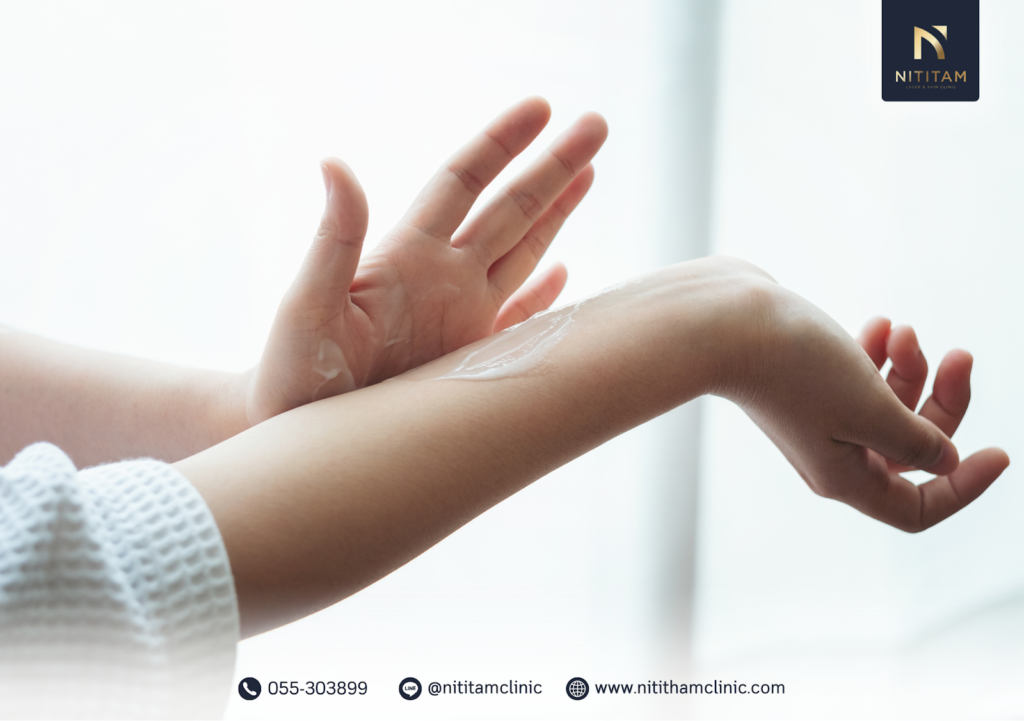
How to prevent the rash from spreading
- Continuously moisturize the skin even when there is no rash
The skin of individuals with this condition remains prone to sensitivity. Even when the rash clears, applying moisturizer remains essential.
- Create a skin-friendly environment
Use a humidifier during dry weather, wear cotton clothing, and avoid wool or synthetic fabrics.
- Take care of your physical and mental health
Engage in light exercise, get adequate rest, and reduce stress, as emotions directly affect the immune system.
- Protect Your Skin During Weather Changes
During winter or high-dust periods, extra skin care is recommended. Avoid spending time in extremely dry environments.
Proper skin care and understanding the nature of atopic dermatitis can help you maintain a near-normal lifestyle without relying on aggressive treatments. If you experience dry, itchy skin, or recurring rashes, do not wait for the symptoms to worsen. Early care is generally more effective than allowing the condition to become chronic.
For more information or to book a consultation with a doctor, please contact:
Nititham Clinic Phitsanulok
Tel: 055-303899, 097-251-3390
Line: https://lin.ee/mxQAzch
Facebook: Nititham Clinic
Nititham Clinic Bangkok (Silom)
Tel: 095-289-9998
Line: https://lin.ee/kUu8NAt
Facebook: Nititham Clinic, Silom Branch, BTS Sala Daeng