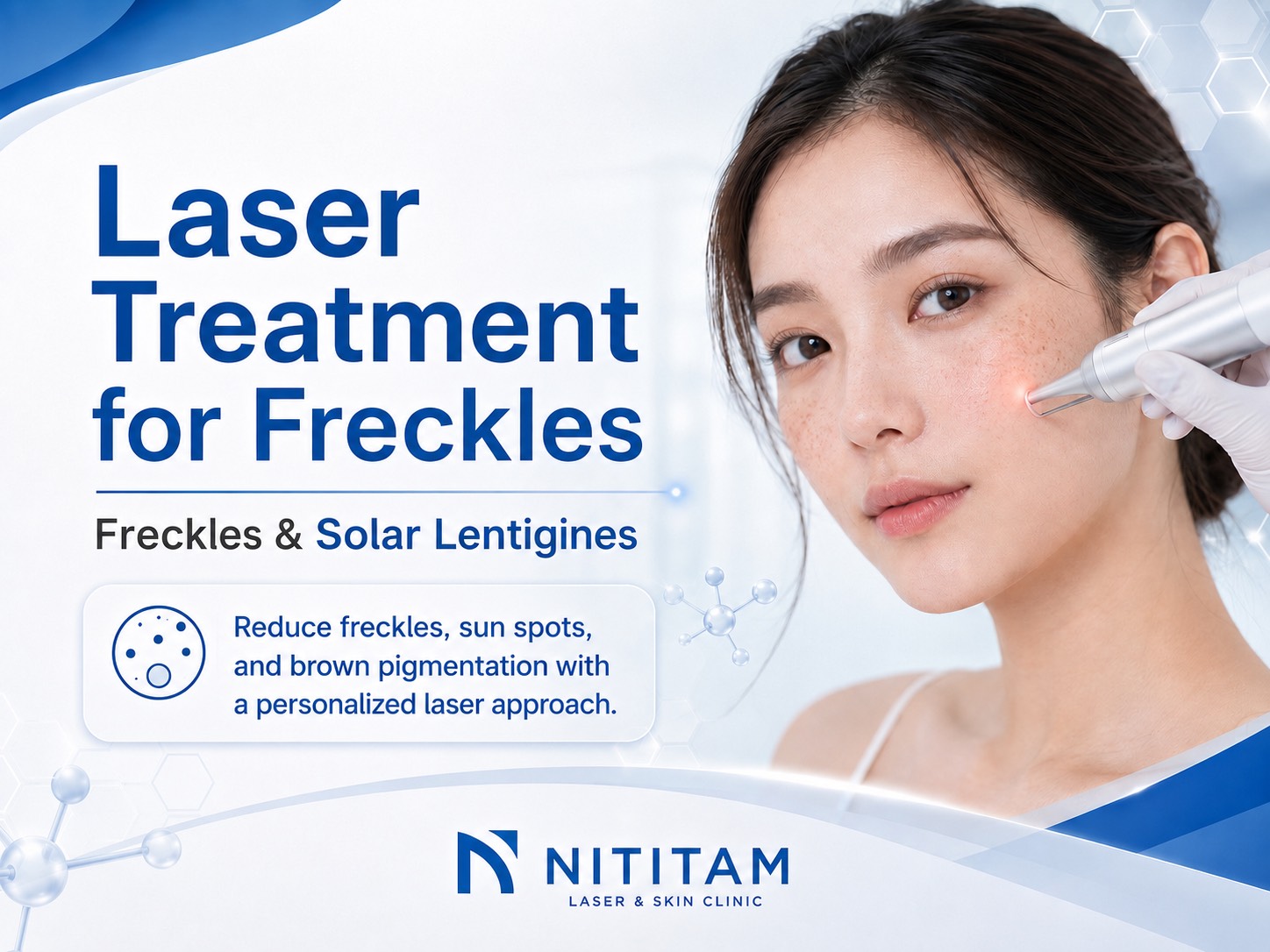
Laser freckle treatment program to reduce freckles, brown spots, and sunspots for a more even-looking skin tone.
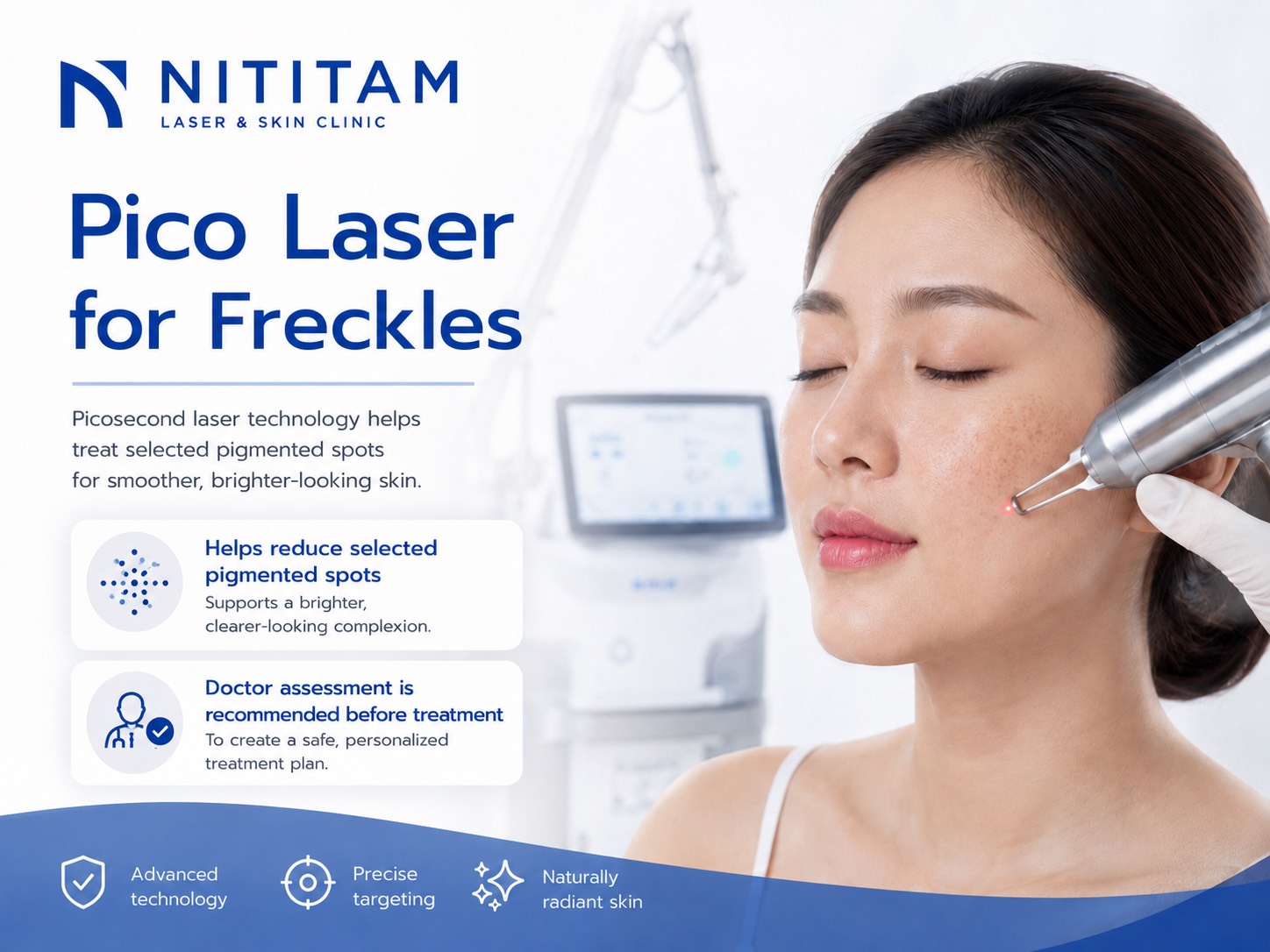
Treat superficial freckles, sunspots, and uneven skin tone with Pico Laser. Skin assessment and treatments are performed by doctors at Nititham Clinic, Phitsanulok and Silom, Bangkok branches. Book your appointment now via LINE: @nititamclinic
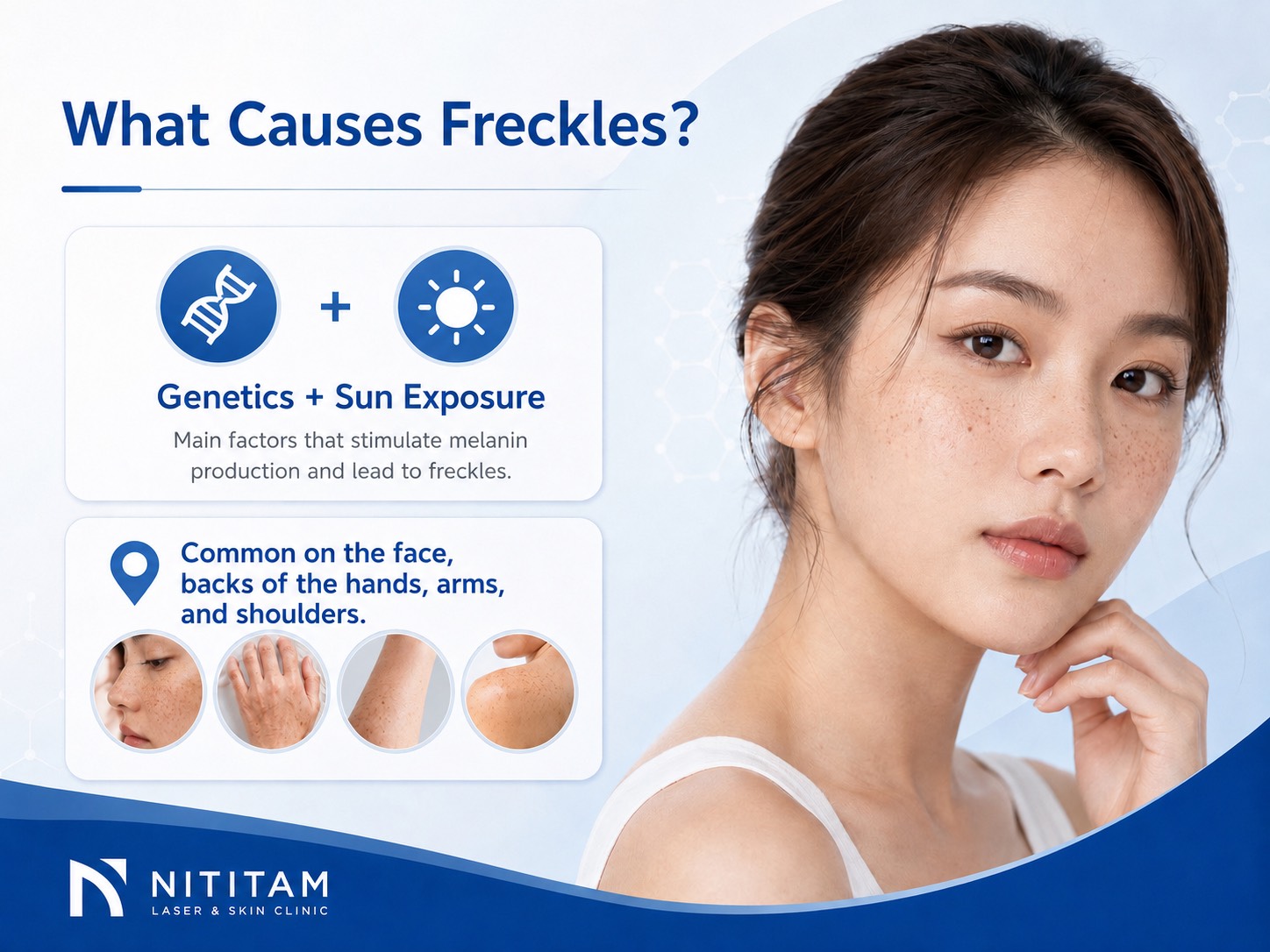
Freckles are a common pigmentation issue, often appearing as small brown spots scattered across the face, especially on the cheeks, nose, and forehead, as well as areas frequently exposed to sunlight, such as the back of the hands, arms, and shoulders.
While freckles are harmless for most people, an increase in the number or darkening of these brown spots can lead to an uneven skin tone.
Pigment lasers are one of the methods used to reduce freckles and sunspots. The wavelength and energy are carefully selected to suit each individual’s pigment type, skin tone, and the specific location of the lesion.
What causes freckles?
The word “Freckles” What is commonly referred to as freckles can actually indicate several types of pigmented lesions. The two most common groups are:
Freckles (Ephelides)
These typically appear as small brown spots scattered across the face and sun-exposed areas. They are associated with both genetics and sun exposure. The color generally darkens with increased sun exposure and may fade during periods of less sunlight.
Sun Spots (Solar Lentigines)
Often appearing as brown spots or patches with relatively distinct borders, they occur in areas with prolonged sun exposure, including the face, cheekbones, backs of the hands, arms, shoulders, and upper chest. Sun spots typically increase with age and cumulative lifetime sun exposure.
What is the difference between freckles and melasma?
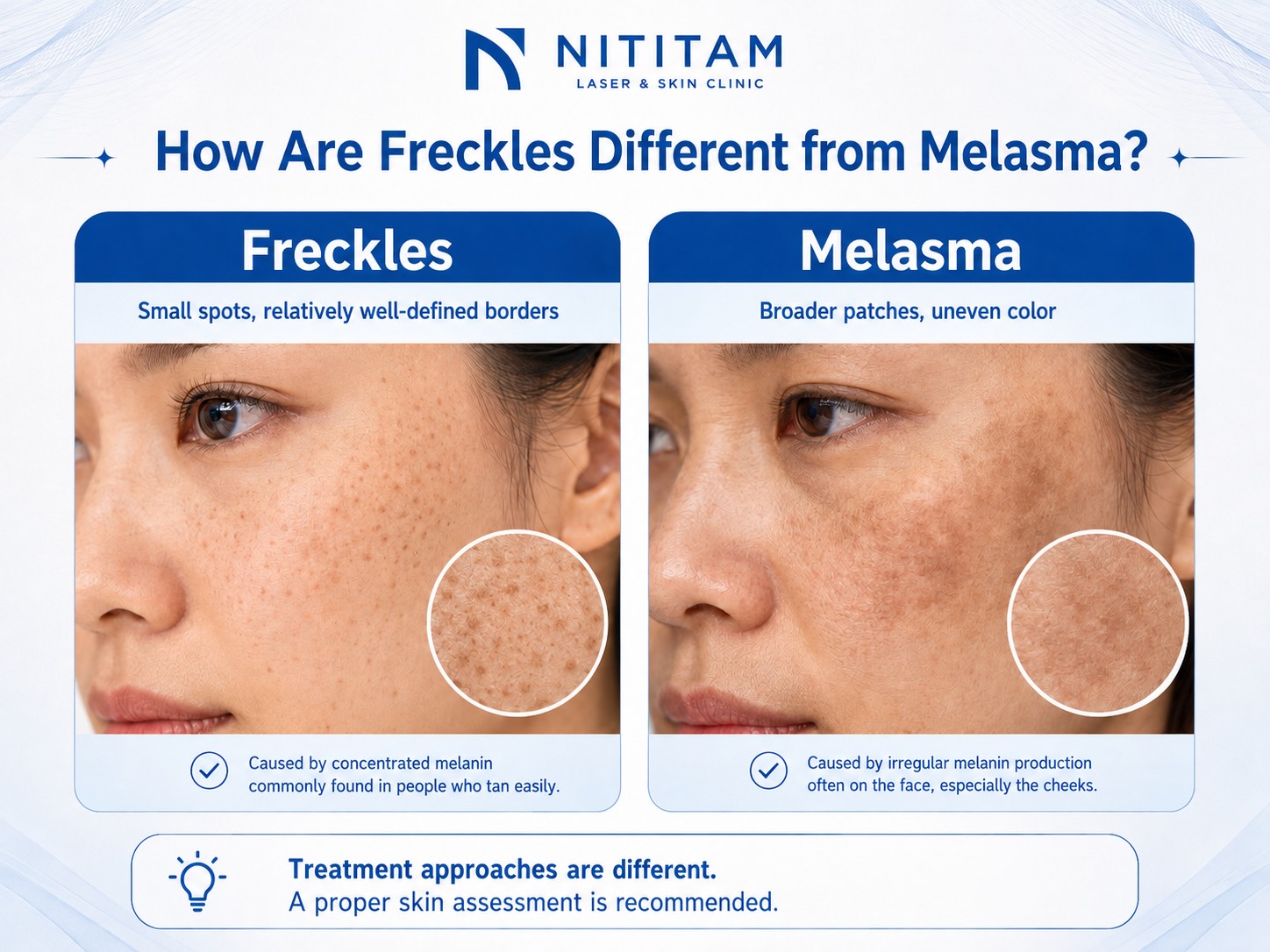
Freckles and melasma are distinct conditions and require different treatment approaches.
Freckles Typically appears as brown spots with relatively well-defined edges.
Melasma Usually appears as broader brown or grayish-brown patches, involving multiple factors such as sunlight, hormones, and skin inflammation.
Before any laser treatment, a doctor will assess whether the condition is freckles, sun spots, melasma, post-inflammatory hyperpigmentation, or other types of pigmented lesions, as lasers are not equally suitable for all types.
How Does Laser Freckle Removal Work?
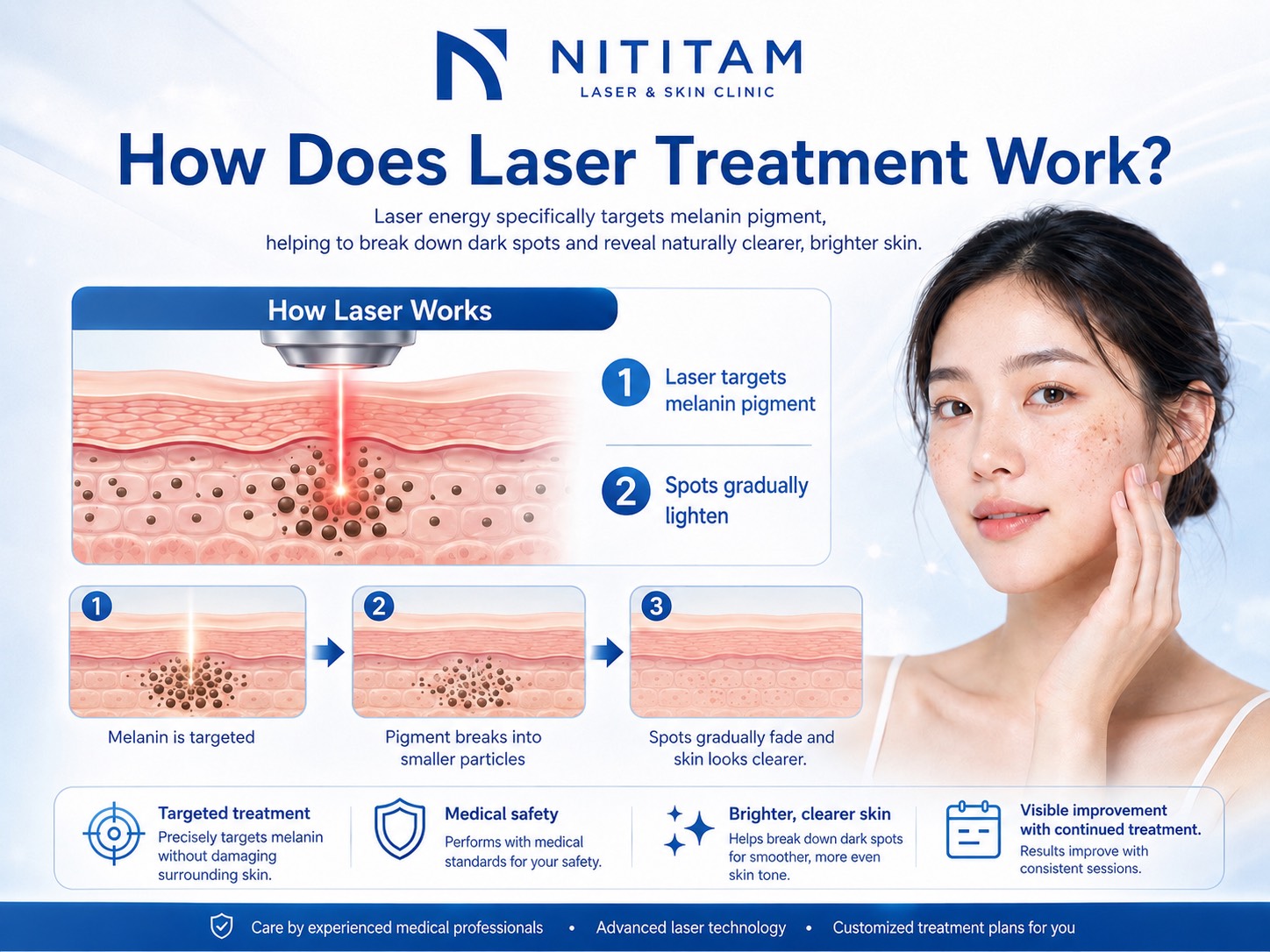
Laser freckle removal works by delivering targeted energy specifically to the melanin in the freckles. The pigment absorbs the laser energy and breaks down into tiny particles. The body then gradually eliminates these particles through its natural processes, causing the brown spots in the treated area to gradually fade and the skin tone to become more even.
Pico Laser for Freckle Treatment
Picosecond Laser or Pico Laser is a laser technology that emits energy in ultra-short picosecond pulses. It can be used to treat various pigmentation disorders, including Freckles and Solar Lentigines.
Research in Asian patients indicates that multi-wavelength Picosecond Lasers can reduce Freckles and Solar Lentigines. A randomized split-face study in Asian patients also found that both 532 nm and 755 nm Picosecond Lasers can be used to treat Solar Lentigines. The choice of wavelength should be considered based on the characteristics of the lesions and individual skin tone.
Why Laser Selection Depends on the Type of Freckles
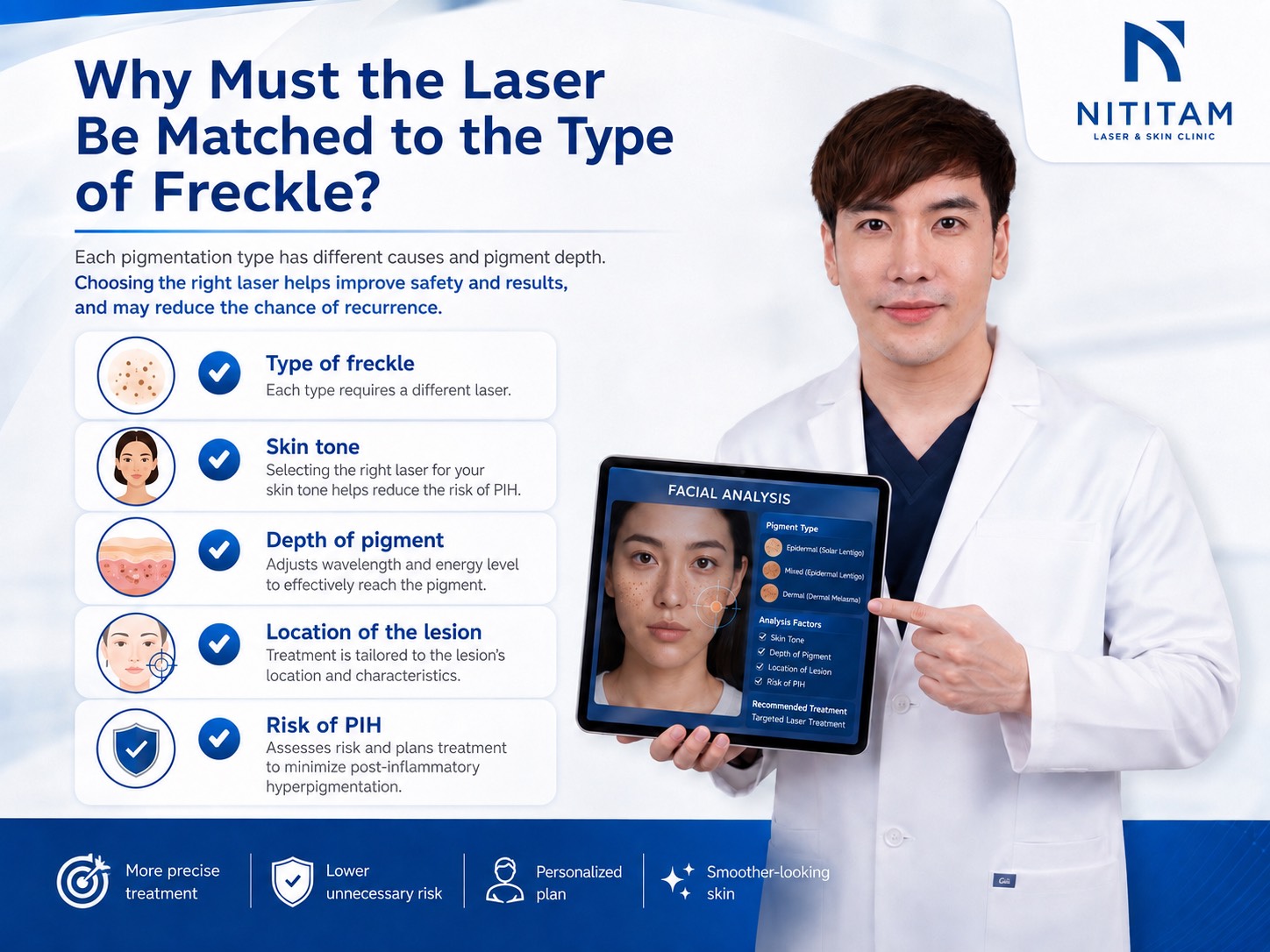
Treating freckles does not mean using the same type of laser or energy for everyone. The doctor will consider several factors together, including:
Type of freckles
Color and intensity of the mark, pigment depth
Patient’s skin tone
Location of the mark
History of post-inflammatory hyperpigmentation
Previous laser treatment history
Especially for Asian skin, appropriate energy settings are crucial, as post-inflammatory hyperpigmentation (PIH) can occur after laser treatment.
Research data on Solar Lentigines in Asians shows that both Picosecond and Q-switched Lasers can reduce pigmentation, but the risk of PIH varies depending on the technology and treatment method.
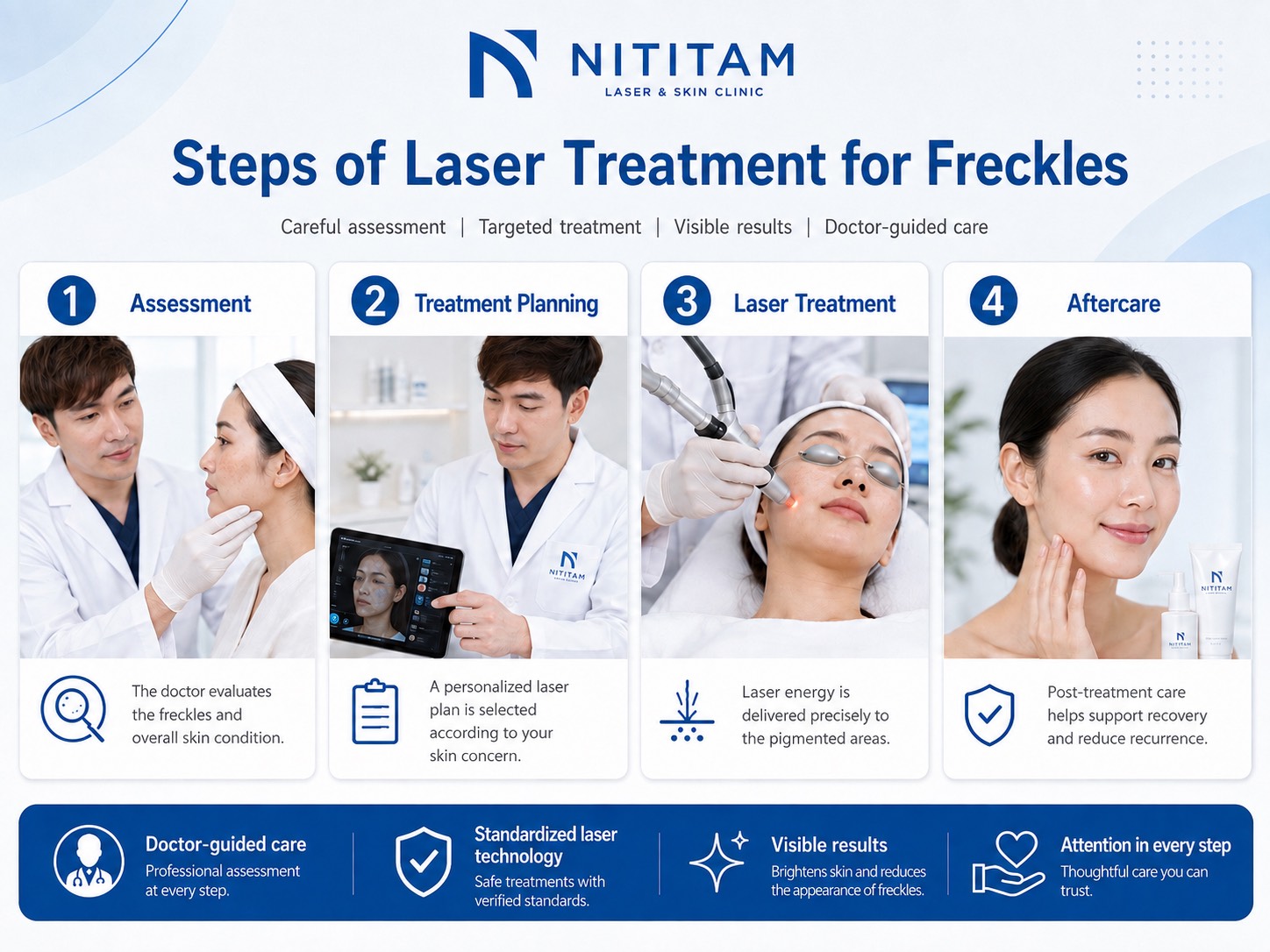
Laser freckle treatment process
Doctor’s examination and lesion assessment Assess the type of freckles and differentiate them from melasma or other pigmented lesions before every treatment.
Laser treatment planning Select the laser type, wavelength, and energy level tailored to the individual’s skin tone and freckle characteristics.
Skin cleansing Prepare the treatment area, and a topical anesthetic may be applied as appropriate.
Target the freckle areas with the laser. The doctor adjusts the energy level based on the characteristics of each spot to accurately target the pigment.
Post-Laser Skin Care After the treatment, you may experience temporary redness or darkening of the freckles. Some techniques may cause thin scabs to form, which will gradually peel off on their own.
Will There Be Scabbing After Freckle Laser Treatment?
This depends on the type of laser and the energy used. For Spot Treatments targeting freckles directly, the treated areas may darken and form small scabs following the procedure.
You should allow scabs to fall off naturally. Avoid picking or scratching, as this may increase the risk of inflammation and subsequent dark spots.
How to care for your skin after laser treatment
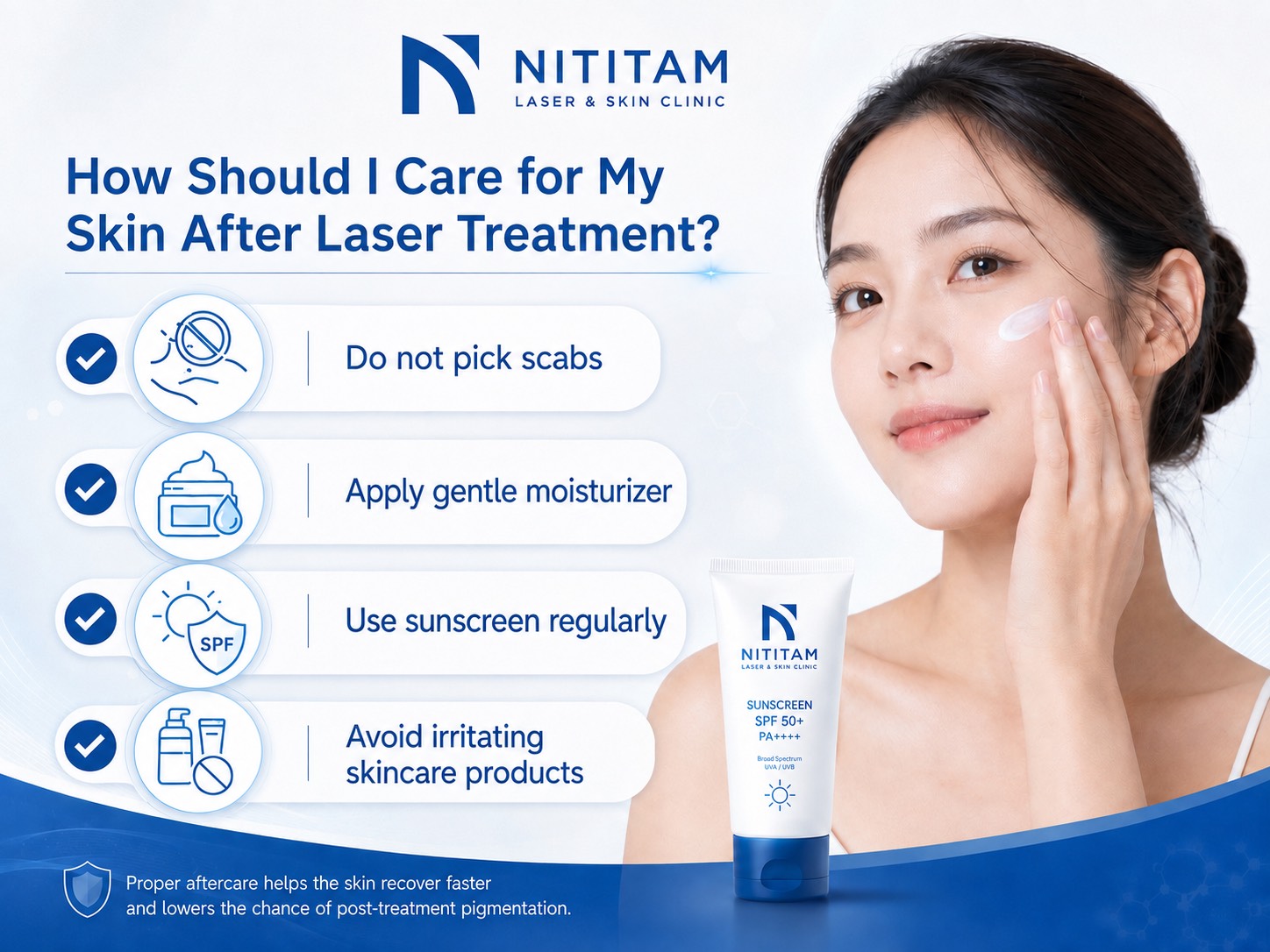
After the treatment, you should care for your skin gently, with a particular focus on sun protection. General guidelines include:
Avoid picking or scratching the laser-treated area.
Avoid skin-irritating products during the initial period.
Use moisturizer to maintain the skin barrier.
Apply Sunscreen Regularly
Avoid strong sunlight
Strictly follow the doctor’s post-treatment instructions.
Sun protection is crucial for both reducing the risk of PIH and preventing freckles from darkening again in the future.
How many freckle treatments are needed to see results?
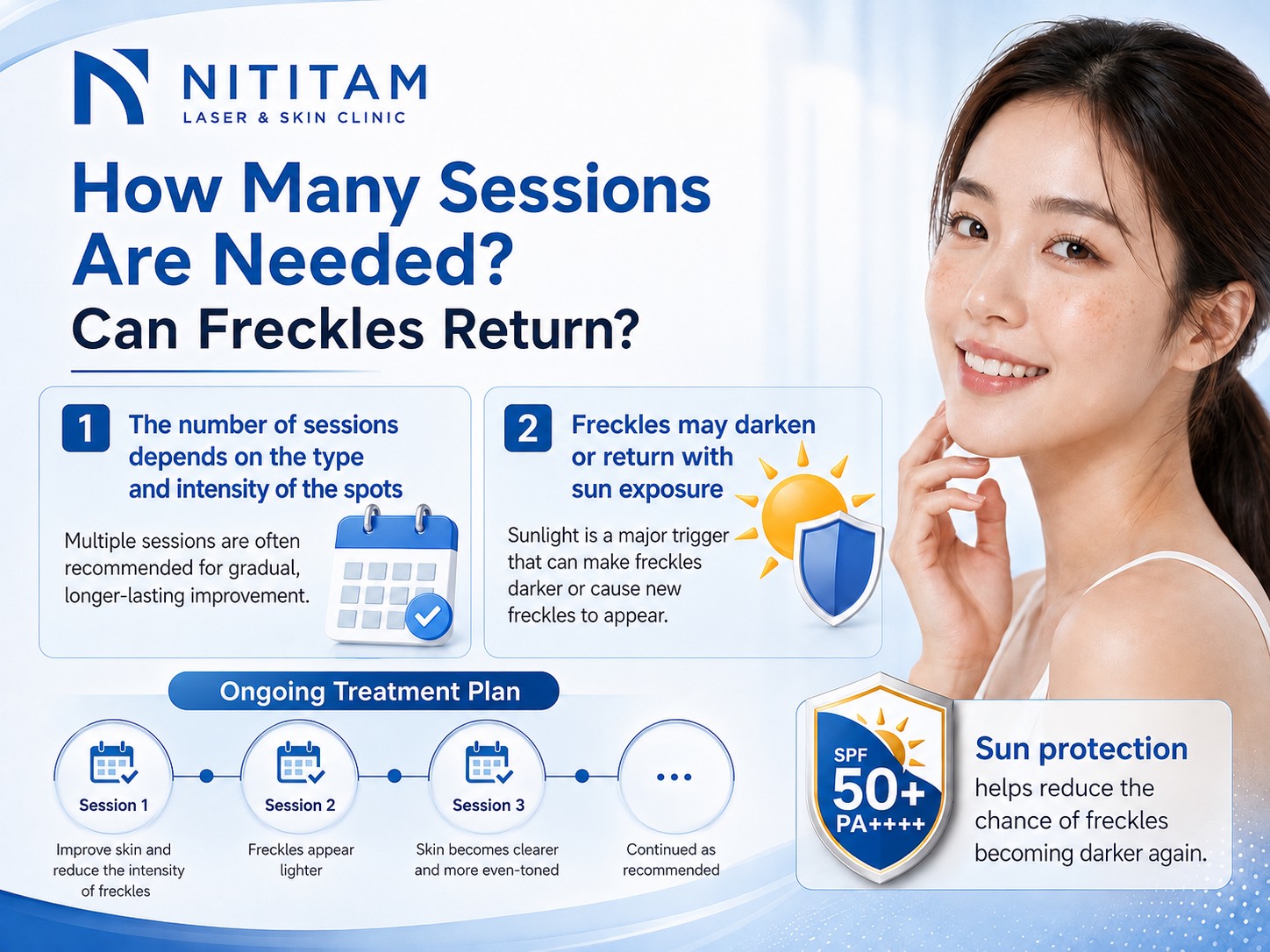
The number of sessions depends on the type of freckles, pigment intensity, number of spots, skin tone, and the type of laser used. Some freckles may respond well after just a few sessions, while others may require repeated treatments to achieve the desired level of fading. The doctor will evaluate the results after each session before planning the next step of the treatment.
Can freckles return after treatment?
Freckles can reappear or darken, especially in individuals with a genetic predisposition or regular sun exposure. Laser treatments help reduce existing pigmentation at the time of treatment but cannot prevent genetic factors or future sun damage. Therefore, applying sunscreen and avoiding intense sun exposure are essential components of long-term care.
Which areas can be treated with laser for freckles?
Treatments can be assessed for various areas, including the face, cheekbones, nose, forehead, back of the hands, arms, shoulders, and upper chest. A doctor will evaluate the type of lesion and the suitability of the laser prior to every treatment.
Who is a suitable candidate for laser freckle treatment?
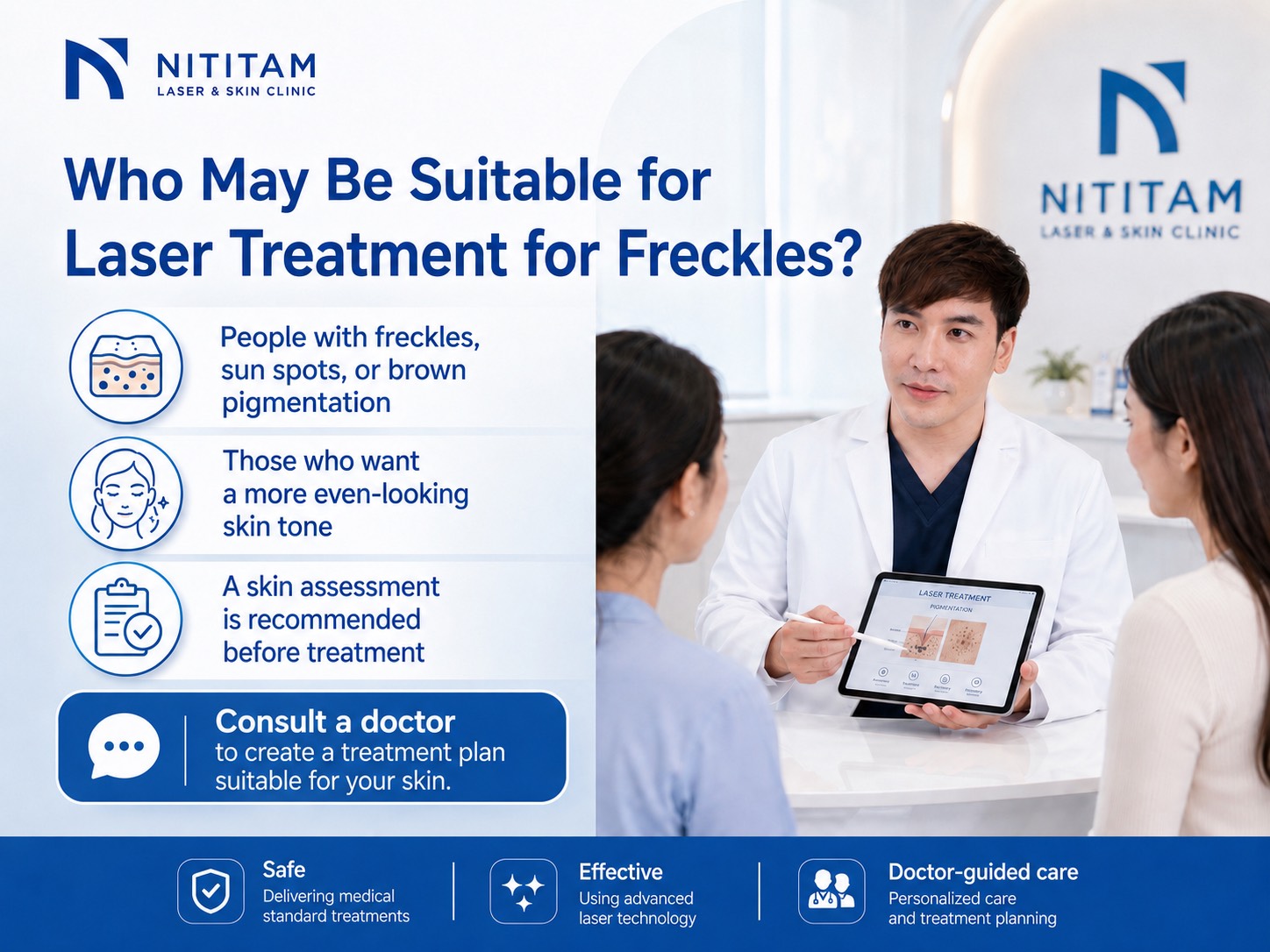
This program may be suitable for
Individuals with freckles
Sunspots (Solar Lentigines)
Brown spots from sun exposure
Uneven skin tone from localized pigmentation
Noticeable freckles requiring a reduction in pigmentation.
However, if the spot exhibits abnormal characteristics such as an asymmetrical shape, irregular borders, multiple colors, rapid changes, growth, bleeding, or ulceration, a proper medical diagnosis is required first. Laser treatments should not be performed without a thorough evaluation of the lesion.
How Nititam Clinic Treats Freckles and Pigmented Spots
Nititam Clinic provides services at both the Phitsanulok and Bangkok (Silom) branches, overseen by Dr. Nititam Rattakasikorn (Medical License No. 37602). With over 10 years of experience in dermatology and lasers, he is an international speaker who personally consults and oversees every case.
Every case begins with an assessment of the lesion’s characteristics to distinguish whether it is freckles, sun spots, melasma, or other types of pigmentation. Then, the appropriate laser technology and energy level are selected for each individual, taking into account the type of pigment, skin tone, depth of the lesion, location, and the risk of PIH. This ensures an appropriate treatment plan and minimizes unnecessary energy exposure to the skin.
Frequently Asked Questions About Freckle Removal Laser
Is laser treatment for freckles painful?
Patients may experience a mild snapping, warm, or tingling sensation during treatment.
The level of discomfort varies depending on the laser technology, treatment area, and energy used.
Is there downtime after laser treatment?
Downtime depends on the treatment technique.
Some treatments may cause temporary redness or mild darkening of the treated spots, while spot treatment may produce small superficial scabs.
Can Pico Laser treat freckles?
Pico Laser can be used for certain types of freckles, solar lentigines, and other pigmentation concerns.
The appropriate wavelength and laser settings should be selected according to the patient’s skin and the type of pigmentation.
Are freckles and melasma treated with the same laser?
Not necessarily.
Freckles and melasma have different characteristics and underlying mechanisms.
A proper diagnosis should be made before selecting the treatment.
Can laser treatment permanently remove freckles?
aser treatment can reduce existing freckles and pigmentation, but new freckles can develop in the future, especially with continued sun exposure.
Regular sunscreen use and sun protection remain important after treatment.