


Answering All Your Questions: What Causes Vitiligo? Can It Be Treated? How Long Does It Take to Heal?
Uneven skin tone or white patches scattered across various parts of the body can cause concern for many, especially when these marks appear on the face, arms, legs, or other highly visible areas. This issue may be more than just an uneven complexion, as in many cases, it could be a condition known as “vitiligo,” which is a skin condition that requires appropriate care.
This article provides an in-depth look at vitiligo, along with possible medical treatment guidelines.
What is Vitiligo?
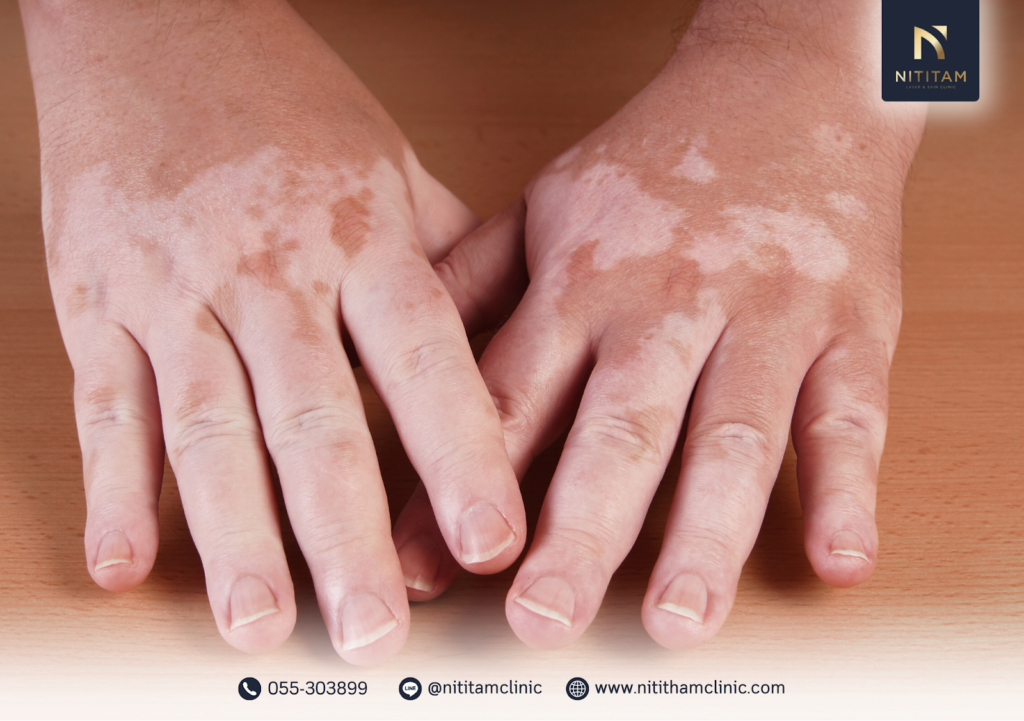
Vitiligo is a condition in which skin pigment, or melanin, decreases or stops functioning, resulting in white patches on the skin with distinct borders. These patches may expand or increase in number over time. Melanin is produced by cells called melanocytes. If these cells stop working or are destroyed, the affected area loses its pigment, leading to noticeably white skin, which is especially prominent in individuals with darker skin tones.
What does vitiligo look like?
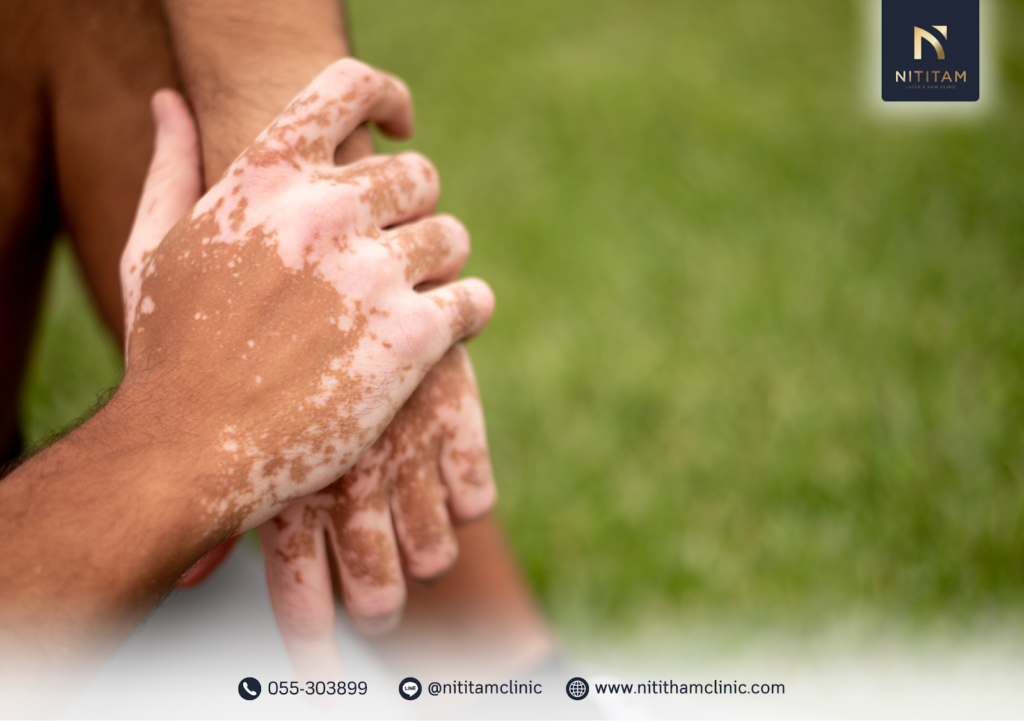
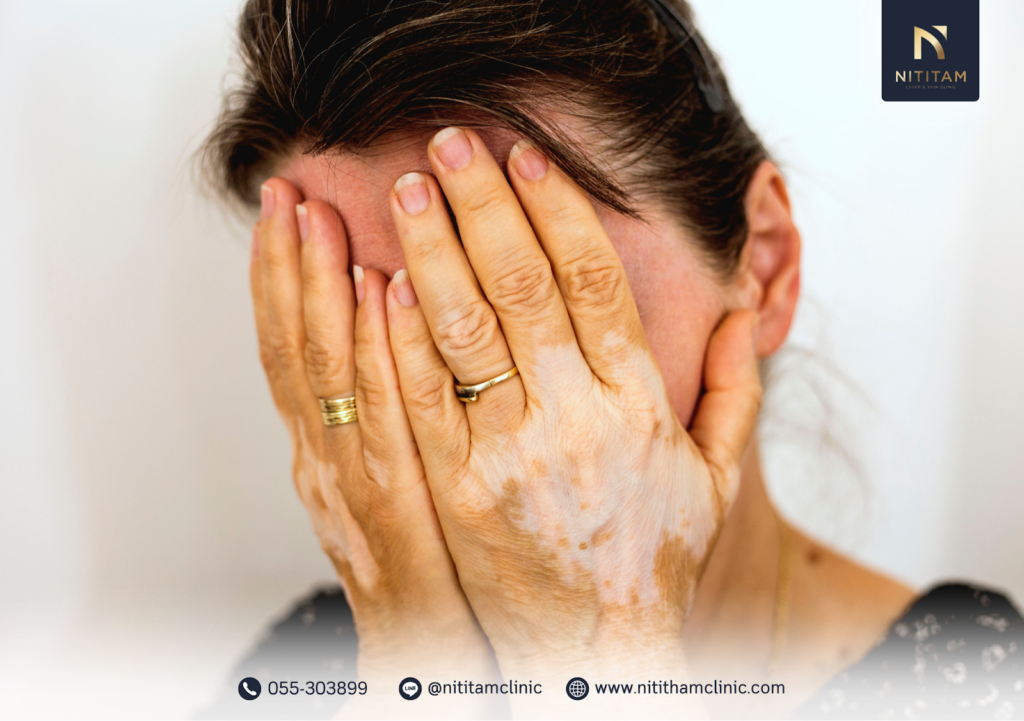
The prominent feature of this condition is the presence of pale or completely white skin patches, which may have well-defined borders. Common symptoms include:
- White patches on the face, around the eyes, lips, hands, arms, legs, or genital area.
- Starts as small spots that gradually expand.
- May appear as multiple patches scattered across the body or occur in one specific area.
- No pain, burning, or itching.
- Hair in the affected areas may also turn white.
What causes vitiligo?
The exact cause of this condition is currently unknown, but several medical theories suggest it is related to
1. Autoimmune condition
The body mistakenly attacks and destroys its own pigment cells, causing the melanocytes to die.
2. Genetics
Individuals with a family history of this condition have a higher risk than the general population.
3. Stress and Emotional States
In some cases, symptoms become clearly noticeable after experiencing severe stress.
4. Free Radicals and Body Imbalances
Some studies suggest that free radicals may make pigment cells more susceptible to damage.
5. Other triggers
Such as skin trauma, intense sunlight, exposure to certain chemicals, or specific viral infections.
Can vitiligo be completely cured?
This condition is considered a chronic disorder with no definitive cure. However, symptoms can significantly improve with proper care and treatment. The main focus is on controlling the spread and stimulating melanin production to restore pigmentation in certain areas.
Common Clinical Treatments for Vitiligo
1. Topical Medications
- Anti-inflammatory topical medications
- Topical immunosuppressants, often used in early stages or mild cases
2. Ultraviolet Light Therapy (UV Therapy)
- Such as Narrowband UVB or Excimer Light
- This helps stimulate the recovery of pigment cells and is applied specifically to the affected areas.
3. Specialized Laser Treatments
- For example, the Excimer Laser, which delivers targeted, concentrated light energy to the specific treatment area.
4. Melanocyte Transplantation
- Suitable for individuals with stable, non-progressive conditions who wish to permanently restore the skin tone in the affected areas.
- This procedure is complex and requires an evaluation by a medical professional.
5. Using Cosmetics for Concealment
- For those who do not wish to undergo treatment, cosmetics can be used to even out skin tone in daily life.
How Long Does It Take to See Results?
Treatment duration and skin response to each method vary from person to person. Some may begin to see results within 2–3 months, while others may take more than 3 months and require consistent follow-up, depending on several factors such as:
- Affected area (Face and body respond better than hands and feet)
- Size and number of spots
- Duration since onset
- Chosen treatment method

Essential self-care guidelines for vitiligo
- Avoid strong sunlight and apply sunscreen daily.
- Avoid using products that may irritate the skin.
- Take care of your mental health to prevent accumulated stress.
- Receive ongoing evaluation and follow-up care.
- Do not attempt self-treatment without consulting a doctor.
Understanding the nature of the condition and choosing a personalized care plan are essential for improving symptoms. If you begin to experience symptoms or suspect you may have the condition, seeking an early evaluation will help manage it more effectively.
For more information or to book a consultation with a doctor, please contact:
Nititham Clinic Phitsanulok
Tel: 055-303899, 097-251-3390
Line: https://lin.ee/mxQAzch
Facebook: Nititham Clinic
Nititham Clinic Bangkok (Silom)
Tel: 095-289-9998
Line: https://lin.ee/kUu8NAt
Facebook: Nititham Clinic, Silom Branch, BTS Sala Daeng