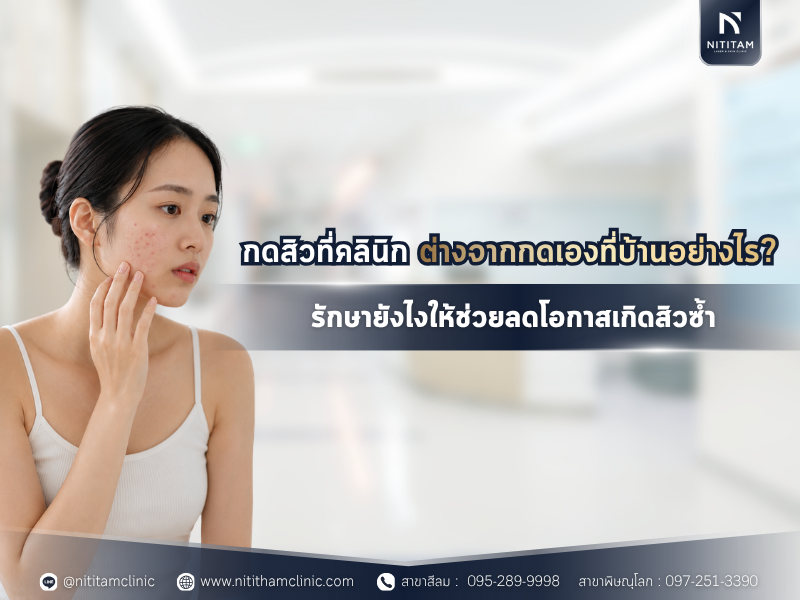



How is Acne Extraction at a Clinic Different from Doing It at Home? Why Doctors Advise Against Popping Pimples Yourself
Many people have tried popping pimples at home only to find that instead of the acne clearing up, they are left with hyperpigmentation, redness, or acne scars that take much longer to treat. On the other hand, those who receive professional acne extraction at a clinic often experience smoother skin and a shorter recovery time.
The difference does not lie in “extracting or not extracting” Rather, it lies in the entire process before, during, and after acne extraction, which involves significantly different details.
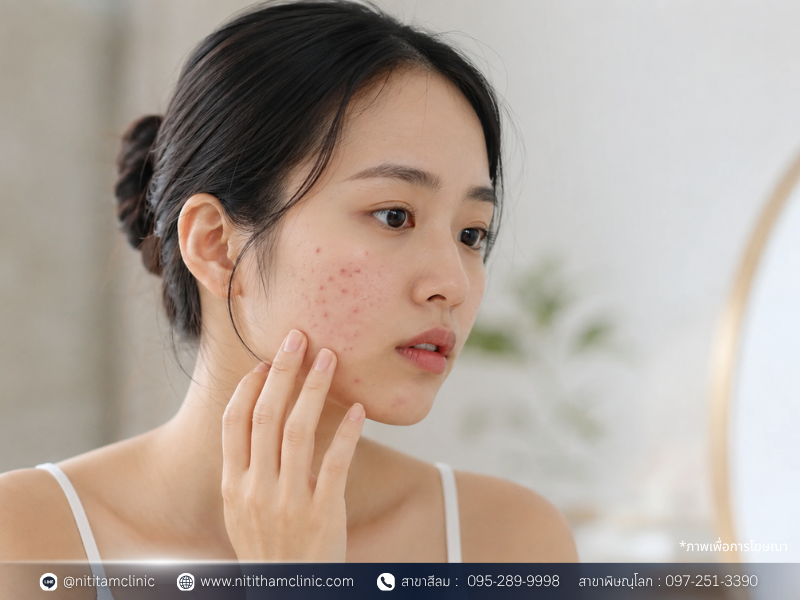
Why At-Home Acne Extraction is Risky
Although it may seem simple, extracting acne yourself carries several risk factors that are often overlooked.
1. Not knowing if the acne is ready for extraction
Each type of acne has a different readiness for extraction. Squeezing unripe or deeply inflamed pimples can push pus and bacteria deeper into the skin, leading to more severe inflammation.
2. Hands and nails are not clean enough
Even after washing your hands, bacteria under the nails and on the skin can remain in sufficient amounts to cause secondary infections in newly opened pores.
3. Applying pressure in the wrong direction
Pressing downwards or applying excessive force can tear the pore walls, causing pus to spread sideways beneath the skin rather than being extracted. Consequently, the original pimple becomes more swollen, or new breakouts develop in the surrounding area.
4. Lack of proper post-extraction skincare
The skin has open pores after acne extraction, making it highly susceptible to infection and hyperpigmentation, especially if appropriate skincare products are not applied immediately.
How is acne extraction at a clinic different?
When performed by a doctor or a trained professional, the entire process differs from at-home acne extraction in every step.
| Procedure | At-Home Extraction | In-Clinic Acne Extraction |
| Acne Assessment | Visual Examination | The doctor will first evaluate if the acne is ready for extraction. |
| Skin Preparation | Basic facial cleansing | Deep cleansing, steaming or warming the skin beforehand |
| Equipment | Bare hands, nails, or standard comedone extractors | Use clean and appropriate tools for skincare. |
| Extraction techniques | Apply pressure based on feel | Use specialized techniques and apply pressure in the correct direction to minimize skin trauma. |
| Post-extraction care | Apply your regular home care creams | Apply medical-grade products tailored to individual skin types |
| Follow-up | None | The doctor recommends a follow-up care plan |
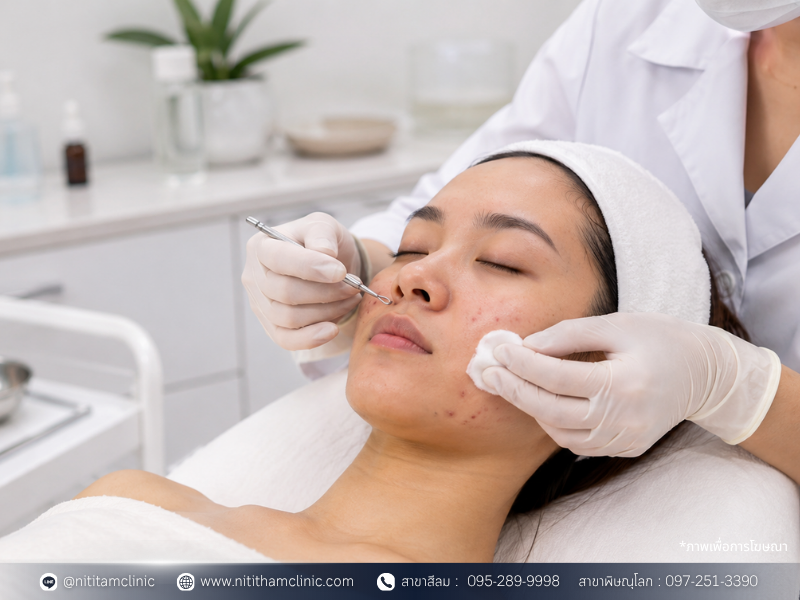
How do acne extraction tools used in clinics differ from those used at home?
One of the most significant differences is the equipment used
Standard Clinic Equipment
- Specific-sized sterile needles for precise acne extraction without damaging the surrounding skin.
- Medical-grade comedone extractors sterilized according to standard protocols.
- Sterile gloves to minimize the risk of cross-contamination from the practitioner’s hands to the patient’s skin.
- Standardized cotton pads and cleansing solutions
These tools are designed to precisely open the acne pore, minimize pressure on the surrounding skin, and reduce the risk of pus spreading deeper beneath the skin.
Which types of acne should you “never” extract yourself?
Although some types of acne can be carefully extracted at home, the following types should only be treated by a medical professional.
- Deep inflammatory acne (Nodules and Cysts) Acne that is deep under the skin without a clear head and is very painful to the touch. Attempting to pop it yourself will worsen the inflammation and highly increase the risk of permanent acne scars.
- Acne in the danger triangle The area around the nose, corners of the mouth, and chin. The veins in this area connect directly to the brain. Infection from improper acne popping in this area carries a significantly higher risk than in other areas.
- Acne that does not subside within 7 days after extraction This sign indicates that the acne may require proper diagnosis and root-cause treatment, rather than just extraction.
- Acne that recurs in the exact same spot after extraction This may be caused by deep clogged pores, chronic inflammation, or internal factors, which require more comprehensive care than just acne extraction.
What treatments should be combined with acne extraction at a clinic?
Generally, doctors do not recommend acne extraction as a standalone procedure. Instead, they will design a skincare plan combining other methods for more sustainable results than a single extraction.
Treatments commonly combined with acne extraction
- Acne Light Therapy Program Helps reduce inflammation and the formation of new acne in the future. Suitable for individuals with multiple inflammatory acne lesions.
- Lhala Peel Program Exfoliates dead skin cells, reduces clogged pores, and helps fade acne marks after extraction.
- Hydra Facial Program Deeply cleanses pores, reducing whiteheads and blackheads that can cause future pustules.
- Laser Program For individuals with acne marks or scars resulting from self-extraction over a period of time.
*Results may vary depending on the individual. The doctor will evaluate your skin condition before recommending an appropriate treatment plan.
Acne extraction at a clinic and popping pimples at home differ in every aspect. This ranges from assessing whether the acne is ready to be extracted, using medical-grade equipment, and applying techniques that minimize skin trauma, to providing post-extraction care tailored to each individual’s skin condition.
Acne that recurs after self-extraction or leaves scars is usually not just a problem of a single improper pop, but a sign that the acne requires deeper care than just extraction.
Nititham ClinicAcne care services are provided by Dr. Nititham Rattakasikorn (Medical License No. 37602), who has over 10 years of experience in dermatology and personally oversees and advises every case. The treatment approach begins with diagnosing the actual cause of acne for each individual before planning a root-cause treatment, rather than just addressing the visible symptoms. To book an appointment or for more information, please contact:
📍 Nititham Clinic, Phitsanulok Branch
- Tel: 097-251-3390
- LINE: https://lin.ee/mxQAzch
📍 Nititham Clinic, Bangkok Branch (Silom)
- Tel: 095-289-9998
- LINE: https://lin.ee/kUu8NAt
Follow us for news and promotions:
- Facebook:Nititham Clinic