


Severe Postpartum Hair Loss! Is It Normal? All Causes and Ways to Restore Healthy Hair
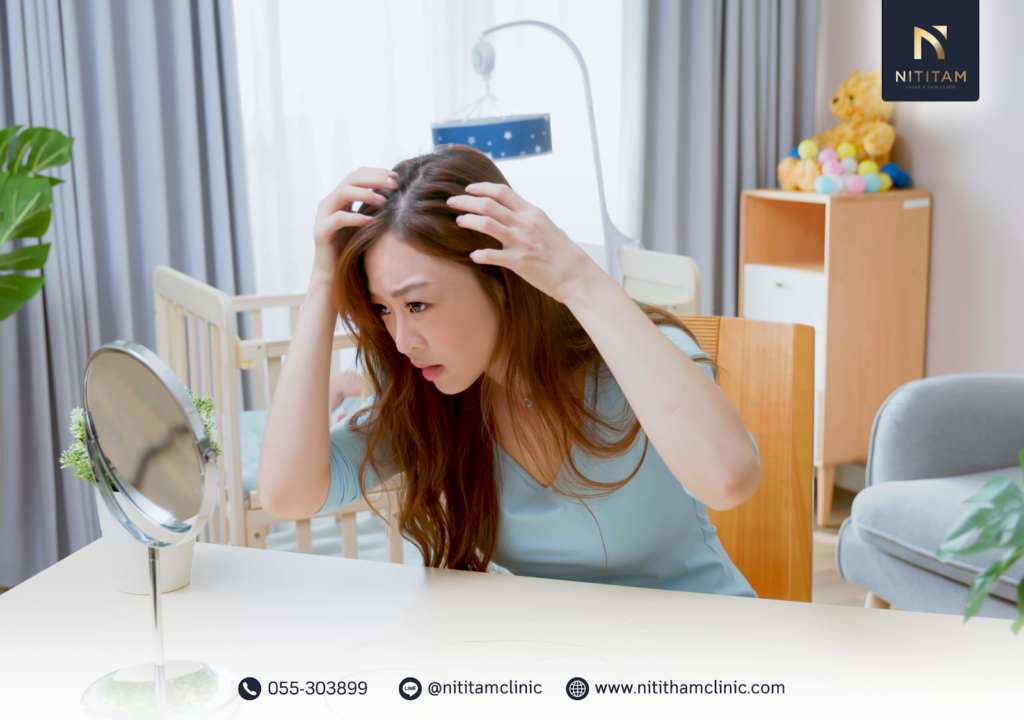
After pregnancy, a mother’s body undergoes numerous internal and external changes. One thing many do not expect is “hair loss” which seems to be much more severe than ever experienced, even if there were no hair issues before pregnancy. Some may feel their hair thinning rapidly, especially around the forehead or the crown, to the point where the scalp becomes clearly visible. This article will explore whether this condition is normal, what causes it, and how to care for your hair to help it regain its strength.
What causes postpartum hair loss?
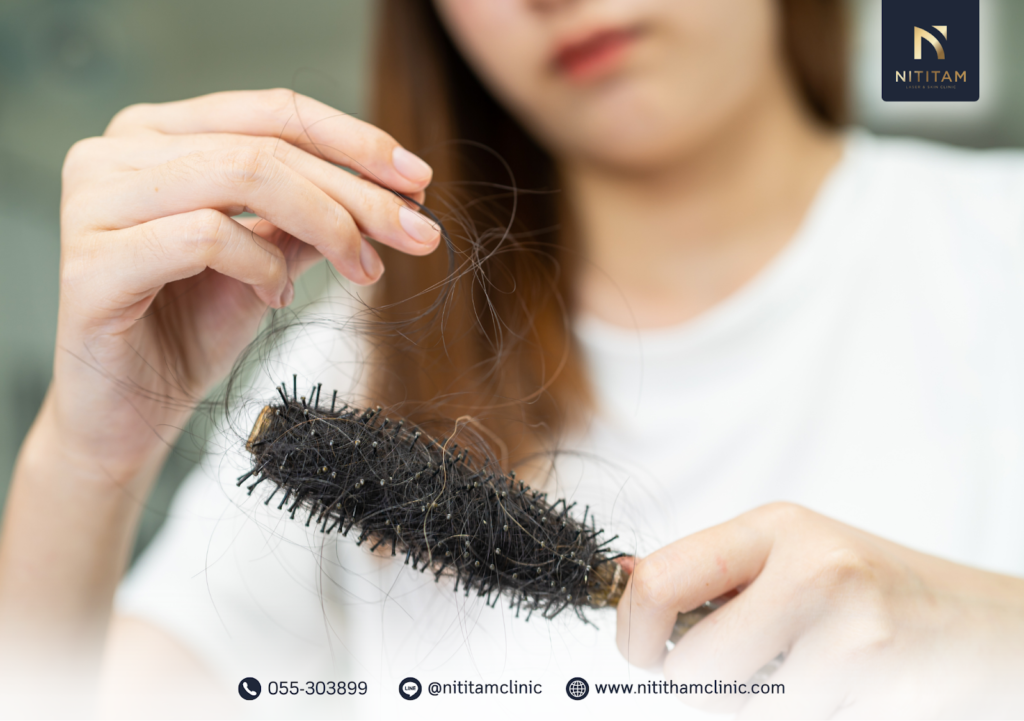
During pregnancy, a mother’s body experiences changes in hormone levels, particularly estrogen, which plays a crucial role in slowing down the hair shedding cycle. This makes the hair appear thicker and shed less than usual. However, after childbirth, these hormone levels gradually decrease, causing the hair retained during pregnancy to enter the shedding phase simultaneously. This results in a condition of hair loss that may seem abnormal, even though it is simply the body’s natural adjustment process.
Common symptoms of postpartum hair loss
These symptoms may seem severe at first, but if it is typical postpartum hormonal hair loss, it can usually recover naturally without the need for medical treatment.
- Experiencing more hair loss than usual while combing or washing.
- Finding a noticeable amount of hair on your pillow or the floor.
- Thinning hair at the hairline, temples, or crown of the head.
- Noticing short, new hair growth in areas of previous hair loss.
Other Factors That May Trigger Increased Hair Loss
While hormones are the primary cause, several other factors can also trigger increased hair loss, such as:
- Stress This includes fatigue or anxiety related to caring for a newborn.
- Lack of sleep Affects blood circulation and the body’s natural repair processes.
- Nutritional deficiency Especially iron, zinc, vitamin B, and protein.
- Rapid weight loss During breastfeeding or postpartum
- Thyroid disorders Which can sometimes occur postpartum and may manifest as hair loss
- Genetics In individuals already prone to hair thinning.
How long does it take for postpartum hair loss to return to normal?
Postpartum hair loss generally begins to improve within 6 months after childbirth and returns to normal around 9–12 months. New hair growth typically becomes visible during the first 3–4 months. The newly grown hair may appear fine or short at first, but rest assured that with a healthy scalp, these hairs will naturally grow longer and stronger over time.
Postpartum Hair Care Guidelines
To help your hair regain its strength faster, it is recommended to maintain a balanced care routine from both the inside and out. Simple approaches include:
1. Eat a balanced diet from all 5 food groups, focusing on proteins and minerals.
Fish, egg yolks, legumes, and green leafy vegetables are excellent sources of protein, iron, and essential vitamins for the hair, such as zinc, vitamin A, vitamin C, vitamin D, vitamin E, and omega-3.
2. Drink an adequate amount of water.
Helps improve blood circulation, which positively affects the hair roots and scalp.
3. Avoid accumulated stress
Although it can be difficult to avoid while raising a child, finding time to relax—such as listening to music, getting enough sleep, or asking for help from those around you—can effectively help reduce the physical impact.
4. Use products that are gentle on the scalp
You should choose gentle shampoos and conditioners free from harsh chemicals, such as sulfates or parabens, which can irritate the scalp and increase hair loss.
5. Reduce the use of heat and chemicals
Avoid using hair dryers, straighteners, or curling irons with high heat, as well as hair coloring, straightening, or perming, because heat and chemicals will weaken and damage the hair.
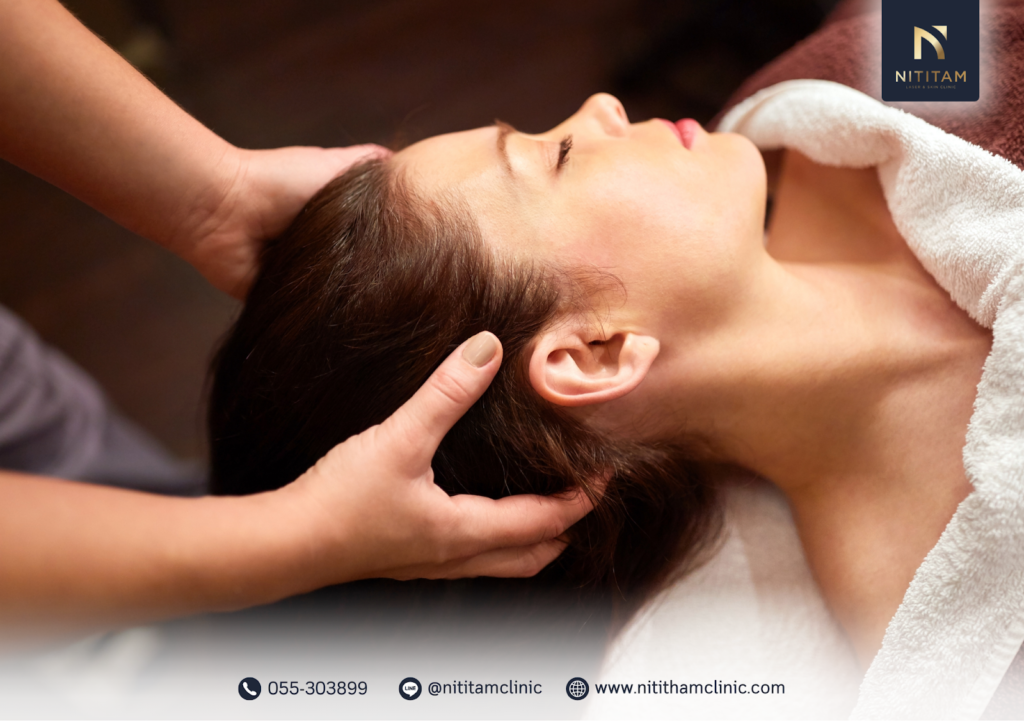
6. Gently massage the scalp daily
Regular gentle scalp massage helps stimulate blood circulation and supports the growth of new hair.
7. Consult a doctor if experiencing unusual hair loss
If excessive hair loss affects your confidence or is accompanied by scalp issues, it is advisable to consult a dermatologist or hair care specialist.
Specialized non-medication treatment options are available.
Some clinics offer specialized, drug-free treatments for postpartum hair loss, such as radiofrequency hair root stimulation, mesotherapy, or low-level laser therapy to improve scalp circulation. These methods are suitable for breastfeeding mothers who wish to avoid all types of chemicals.
Postpartum hair loss can affect your confidence, but by understanding your body’s natural processes and choosing the right care methods, you can navigate this period with less worry. Remember that taking good care of yourself positively impacts your physical and mental well-being, which in turn benefits the care you provide for your little one.
For more information or to book a consultation with a doctor, please contact:
Nititham Clinic Phitsanulok
Tel: 055-303899, 097-251-3390
Line: https://lin.ee/mxQAzch
Facebook: Nititham Clinic
Nititham Clinic Bangkok (Silom)
Tel: 095-289-9998
Line: https://lin.ee/kUu8NAt
Facebook: Nititham Clinic, Silom Branch, BTS Sala Daeng