


Can “Hereditary Hair Loss” Be Treated? Don’t Lose Hope! Discover the Treatment Process at Nititham Clinic
Hereditary hair thinning or baldness is a condition that many people feel “is beyond help” because it is passed down through family genetics. However, modern medical technology offers approaches that can help slow down hair loss, potentially stimulate new hair growth, and strengthen hair roots—especially when targeted treatment is started early. At Nititham Clinic, we believe that understanding the root cause of the problem is the crucial first step toward effective hair restoration.
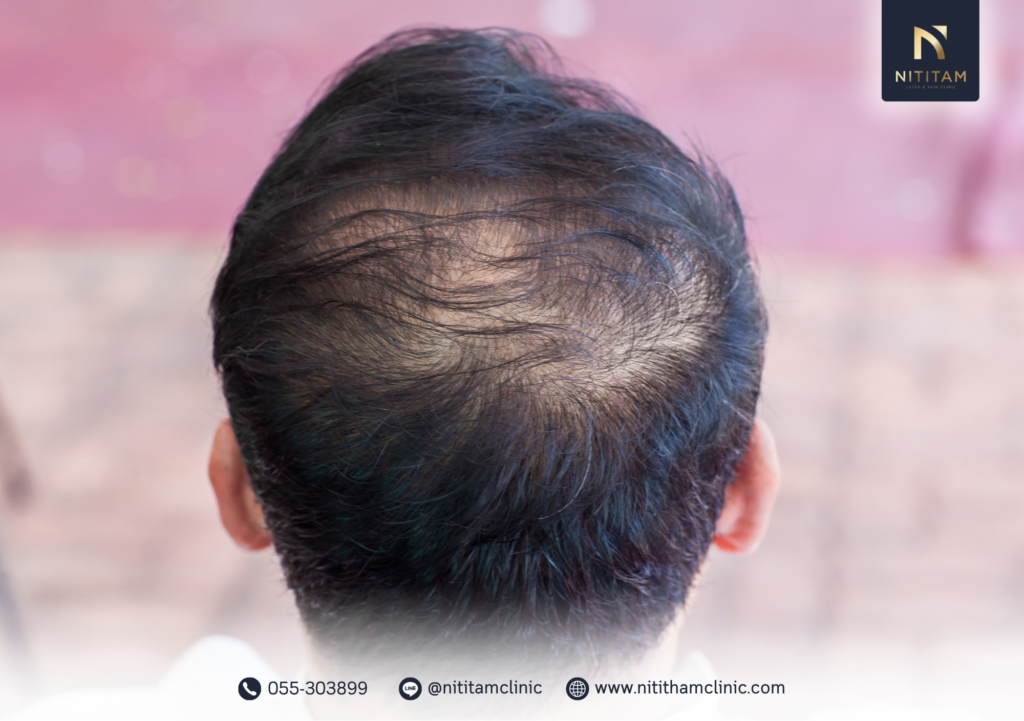
What Causes Hereditary Hair Thinning?
Hereditary hair thinning is caused by the effect of hormones on hair roots, which shortens the hair growth cycle. Newly grown hair becomes progressively smaller and thinner until it eventually stops growing altogether. Individuals with a family history of baldness are prone to developing this condition at a young age, leading to gradual, permanent hair loss if left unattended. General scalp care treatments may not be sufficient; medical approaches specifically designed for this condition are necessary.
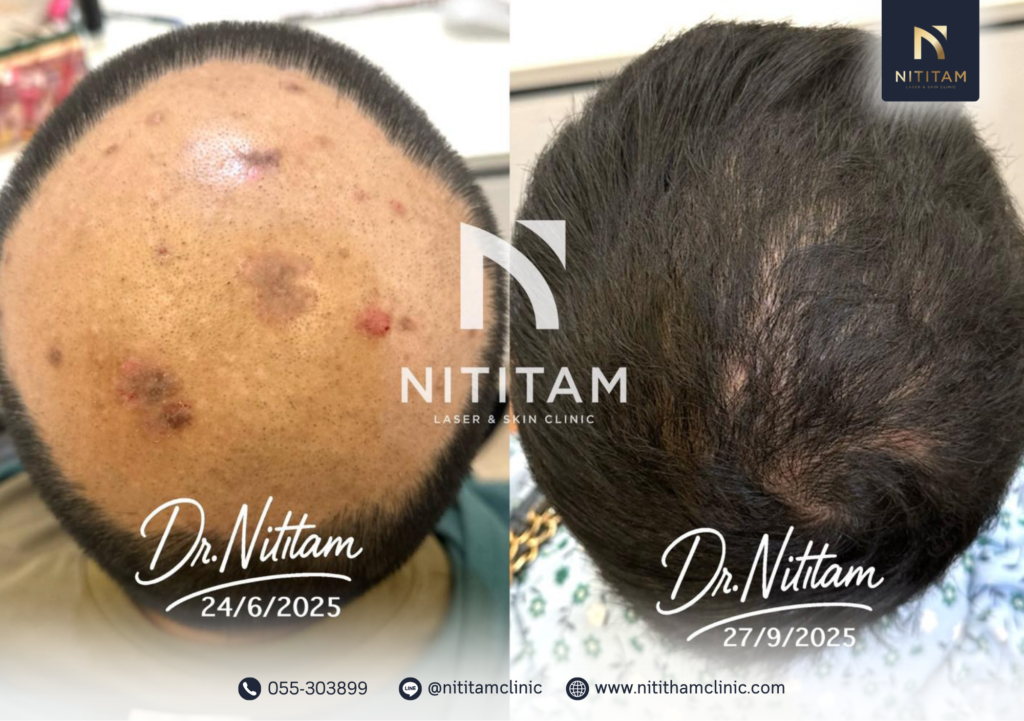
Hereditary Hair Thinning Treatment Approaches at Nititham Clinic
We provide systematic treatment planning, starting with an in-depth diagnosis at the hair root level, examining hair loss patterns, and evaluating all related factors. The doctor will select an appropriate approach for each individual, which may involve a combination of treatments as follows:
1. Blood Test for Hair Loss
Before starting the treatment, the doctor will perform a blood test to evaluate various factors that may contribute to hair loss, such as hormone levels, iron, vitamins, or immune system conditions, ensuring the most accurate treatment plan.
2. Hair and Scalp Examination using Trichoscopy
A high-magnification camera is used to thoroughly examine the condition of the scalp and hair roots. This allows the doctor to analyze whether hair thinning is primarily caused by genetics or if there are other contributing factors.
3. Hair Loss Treatment with Medication
A doctor may consider prescribing specific medications to help reduce the conversion of DHT hormone, a major factor contributing to hair loss in both men and women, while managing symptoms to prolong the lifespan of hair follicles.
4. Hair Follicle Stimulation Laser (Low-Level Laser Therapy)
Using low-level laser energy to stimulate hair follicles is a painless, non-invasive treatment. It helps stimulate blood circulation and improves the recovery of hair follicle cells, helping the hair appear thicker.
5. Laser Treatment for Autoimmune Hair Loss
Suitable for individuals with patchy hair loss (Alopecia Areata) or autoimmune-related hair loss. This specialized laser effectively helps reduce hair follicle inflammation and restores cellular function.
6. Hair Treatment Injections with Regenlab PRP and Autologous Exosome
A highly popular and effective technique that involves extracting the patient’s own blood to create Platelet-Rich Plasma (PRP) or natural signaling cells (Exosomes). This is then injected back into the scalp to stimulate hair follicles to repair themselves and encourage new hair growth.
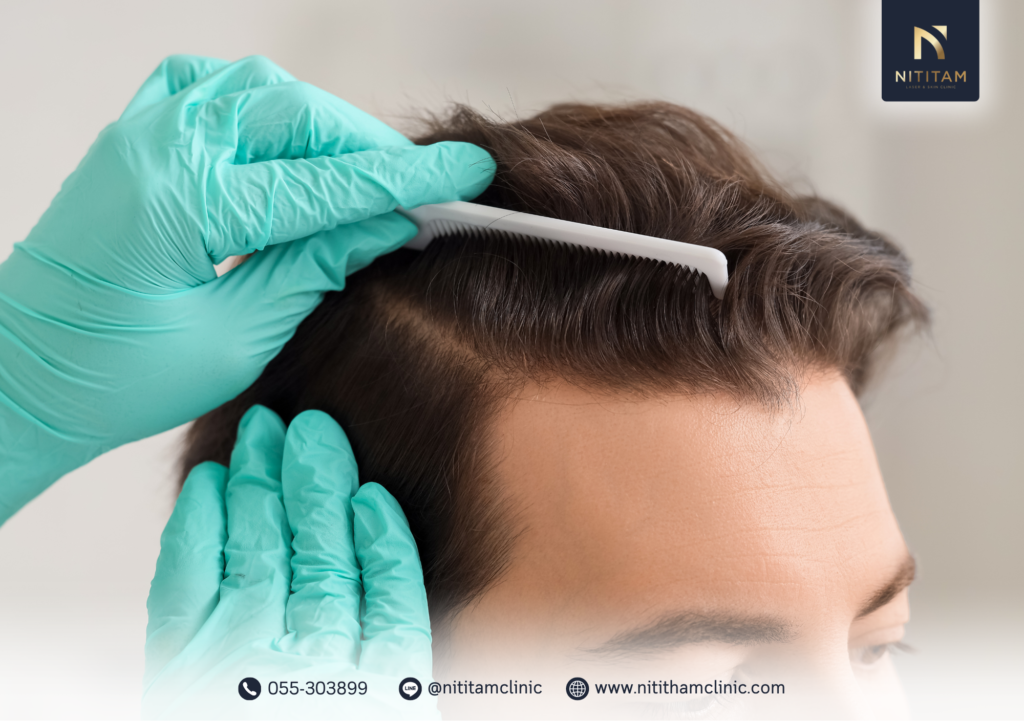
How many sessions are needed to see results?
Results depend on individual hair conditions. Generally, you may start noticing changes after 2–3 sessions, such as reduced hair loss, stronger hair roots, and some new hair growth. We recommend a continuous course of about 4–6 sessions, or more in some cases, to achieve noticeably thicker hair.
Advice from Nititham Clinic Doctors
- If you notice your hair starting to thin at a young age, do not wait for the problem to worsen.
- Preventing permanent hair loss is always more effective than seeking treatment when it is too late.
- Choosing an experienced doctor ensures an accurate assessment of your condition and helps reduce the risk of future permanent hair loss.
With advanced medical technology, starting proper care early can effectively delay, restore, and prevent further hair loss. At Nititham Clinic, we are ready to guide you through every step with exceptional understanding and care.
For more information or to book a consultation with a doctor, please contact:
Nititham Clinic Phitsanulok
Tel: 055-303899, 097-251-3390
Line: https://lin.ee/mxQAzch
Facebook: Nititham Clinic
Nititham Clinic Bangkok (Silom)
Tel: 095-289-9998
Line: https://lin.ee/kUu8NAt
Facebook: Nititham Clinic Silom Branch BTS Sala Daeng