


Laser Scar Treatment: “What Types of Scars” Can Doctors Treat? How Many Sessions Are Needed to See Results?
Scars do not only affect physical appearance but often impact self-confidence, especially when located in highly visible areas such as the face, arms, or legs. Using laser scar treatment It is considered a popular method because it helps fade scars without surgery and requires minimal downtime. However, the questions many people have are: What types of scars can laser treatment help with? How many sessions are needed to see results? This article has the answers.
How many types of scars are there, and which ones can laser treatment actually help?
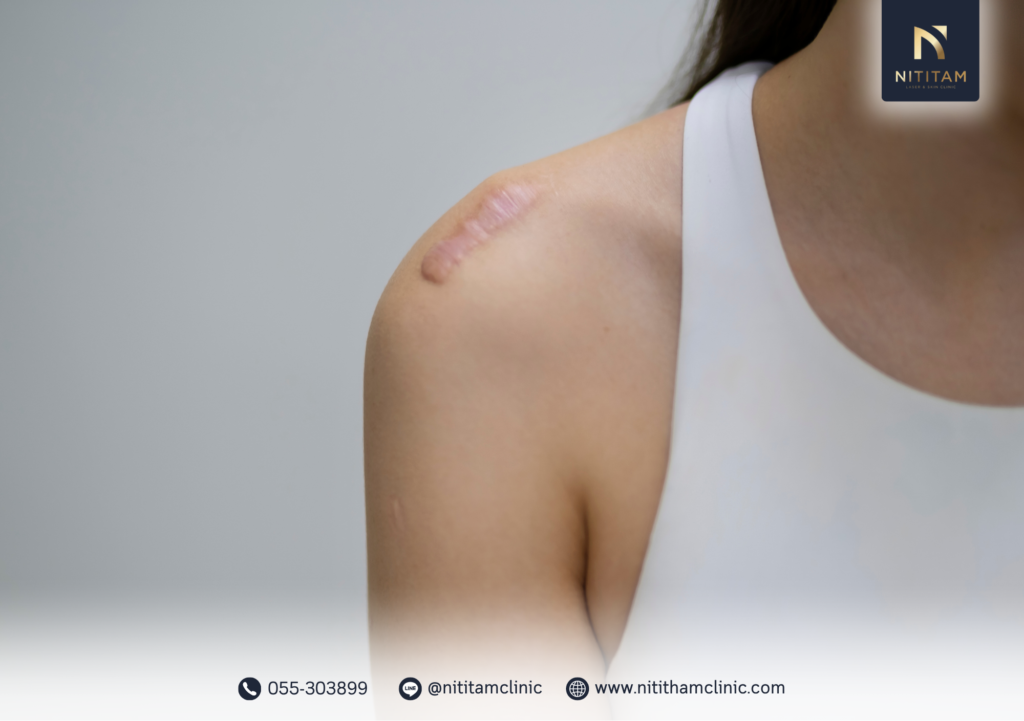
1. Hypertrophic scar
This is a raised scar that forms above the original skin level, often occurring after surgery or from a large wound. However, it remains within the boundaries of the original wound and does not spread.
2. Keloid scar
Similar to hypertrophic scars, but they expand beyond the boundaries of the original wound. They appear as hard lumps and may be accompanied by itching or pain. They are generally more difficult to treat than other types of scars.
3. Atrophic scar
Caused by the loss of tissue, such as acne scars or chickenpox marks. These scars appear as sunken depressions in the skin.
4. Dark scars or dark spots (Post-inflammatory hyperpigmentation)
Healed wounds that leave behind dark or red marks, often occurring after burns, acne, or abrasions.
Laser treatments can help with almost all types. Except for fresh, inflamed, or infected scars, which should be allowed to heal first. Keloid scars may require a combination of special techniques, such as targeted injections along with laser treatments.
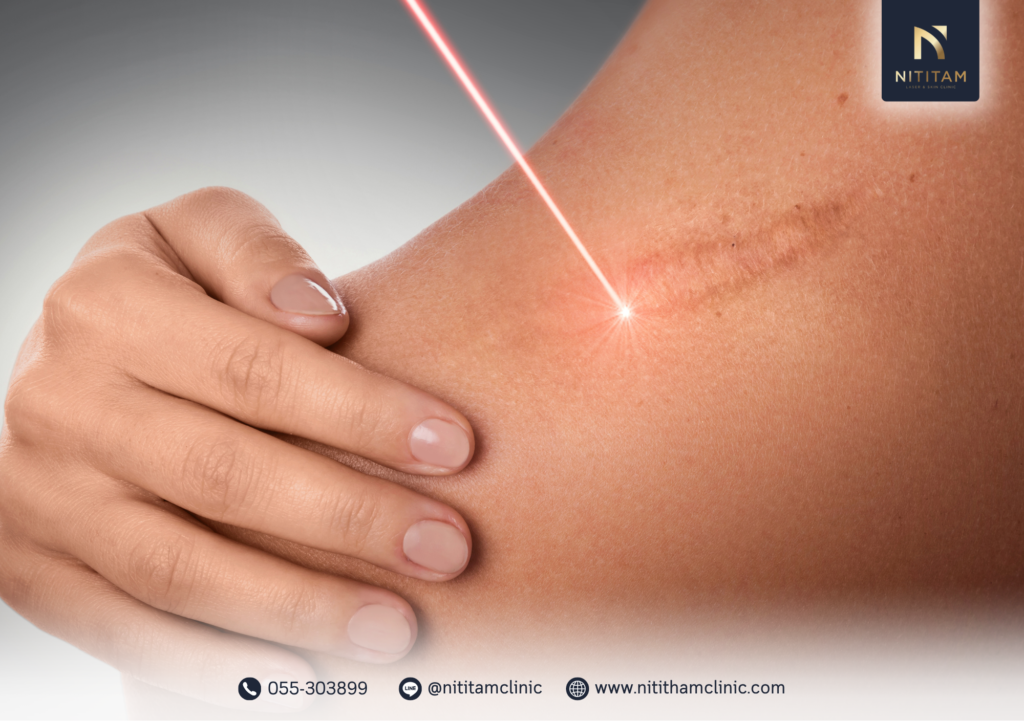
How Do Lasers Treat Scars?
The principle of laser treatment involves delivering light energy into the deeper layers of the skin. This stimulates new collagen production, helps smooth and even out the skin texture, or breaks down excess pigment in dark spots to reduce the discoloration of scars.
There are several types of lasers commonly used by doctors, such as:
- Fractional Laser Helps reduce pitted scars and uneven scar texture.
- Pulse Dye Laser (PDL) Suitable for red and new scars.
- Q-switched Nd:YAG Laser Used to reduce dark spots from scars
- CO2 Laser Helps smooth out raised skin
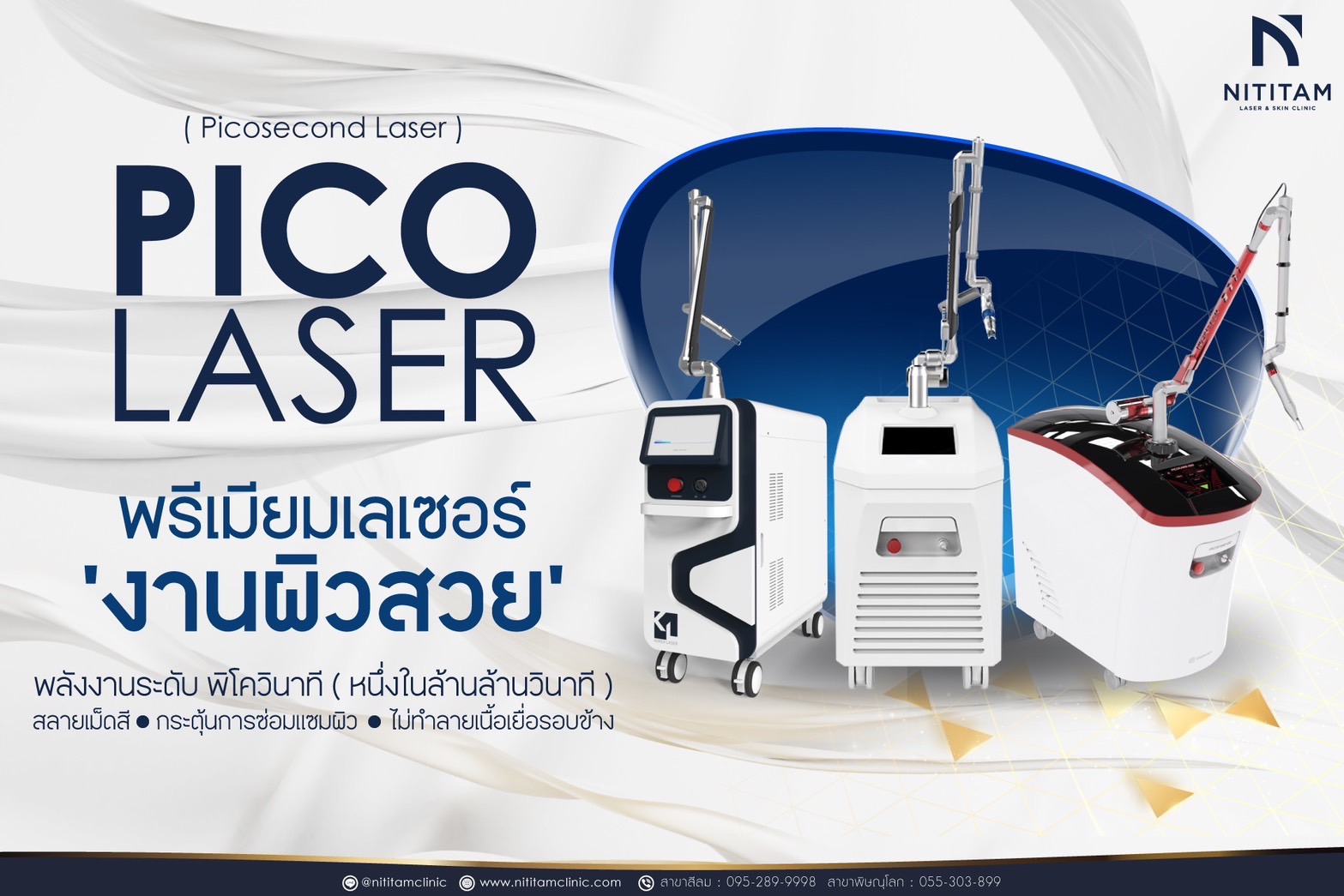
- PicoCare Laser Helps reduce excessive tissue formation, allowing the scar to flatten and decrease in size.
How many sessions are needed to see results?
Generally, changes can be noticed within the first 2–3 sessions, but achieving clear results typically requires about 4–6 sessions. or more in some cases, spaced about 3–6 weeks apart to allow the skin to fully recover. The number of sessions depends on several factors, such as:
- The type of scar (atrophic or keloid scars usually take longer)
- The size and depth of the scar
- The patient’s post-treatment skincare routine
What Types of Scars Require Prompt Medical Attention?
Early treatment can help improve outcomes, as the tissue responds more easily to rejuvenation compared to older, untreated scars.
- Rapidly expanding raised scars
- Deep or widespread pitted scars
- Facial scars that affect your confidence
- New scars showing early signs of abnormality, such as becoming raised or darkened
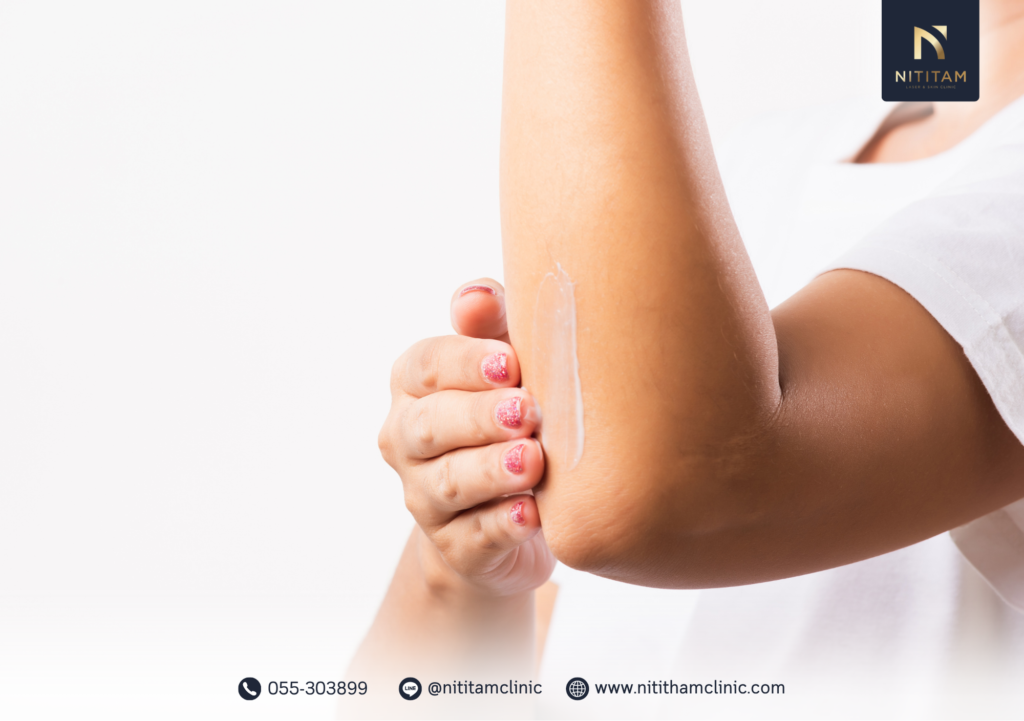
How to care for your skin after laser treatment
Proper aftercare promotes faster recovery and reduces the risk of new scarring
- Avoid sun exposure and apply sunscreen daily.
- Do not pick, scratch, or scrub the treated area.
- Apply moisturizer or medication as prescribed by the doctor.
- Avoid using irritating skincare products such as fruit acids or strong vitamin C.
Laser treatments are effective tools for skin rejuvenation, particularly when applied to scars at the right time and under medical supervision. If you have scars you wish to reduce, whether they are acne scars, pitted scars, or surgical scars, you should start by consulting a doctor to evaluate the most suitable treatment approach for your specific skin needs.
For more information or to book a consultation with a doctor, please contact:
Nititham Clinic Phitsanulok
Tel: 055-303899, 097-251-3390
Line: https://lin.ee/mxQAzch
Facebook: Nititham Clinic
Nititham Clinic Bangkok (Silom)
Tel: 095-289-9998
Line: https://lin.ee/kUu8NAt
Facebook: Nititham Clinic Silom Branch BTS Sala Daeng