


Postpartum Hair Loss: Natural Process or Abnormality? An In-Depth Look at Causes and Hair Restoration Guidelines
For new mothers, the postpartum period should be a joyful time of nurturing a new family member. However, many face anxiety when they notice significant hair shedding. Just gently running fingers through the hair or washing it can result in handfuls of hair falling out. In medical terms, this condition is known as “Postpartum Hair Loss.”
This article explores the underlying physiological mechanisms to help you understand whether this is a natural process or an abnormality requiring prompt treatment. We also provide guidelines on how to care for your hair to restore its thickness and overall health.
Understanding the Hair Growth Cycle and Hormones
To understand the causes of postpartum hair loss, it is necessary to first understand the normal hair growth cycle, which consists of 3 phases:
- Anagen Phase The growth phase. Hair grows longer and remains on the scalp for 2-6 years.
- Catagen Phase Resting phase: The hair root begins to shrink, taking about 2-3 weeks.
Telogen Phase Shedding phase: Hair stops growing and prepares to fall out to allow new hair to grow in its place.

What happens during pregnancy?
During pregnancy, the body experiences a significant surge in estrogen levels. This hormone prolongs the Anagen (growth) phase of the hair cycle longer than usual. Hair that would normally fall out according to the cycle remains, which is why expectant mothers often have thicker and fuller hair.
The Postpartum Turning Point
After childbirth, estrogen levels drop rapidly to return to their normal state. This causes the hair that was “held back” from falling out during pregnancy to enter the Telogen (resting and shedding) phase all at once. This condition is known as Telogen Effluvium This makes it appear to be abnormally severe hair loss, when in fact, it is simply the shedding of accumulated hair.
How much hair loss is considered “normal”?
Generally, postpartum hair loss becomes noticeable around 3 months postpartum This condition can last up to 6 months, or in some cases up to a year, before the body regains its balance and normal hair growth resumes.
- Hair loss can reach up to 400-500 hairs per day (compared to the normal 50-100 hairs).
- Hair typically thins evenly across the scalp, or you may notice thinning around the front hairline.
Hair Care and Restoration Guide for Mothers
Basic care can help slow down hair loss and promote stronger hair roots.
- Nutrition is key. Focus on consuming foods high in protein, iron, zinc, and biotin, such as egg yolks, leafy greens, beans, and meats, to provide the essential building blocks for new hair growth.
- Avoid heat and chemicals. Refrain from perming, straightening, coloring, or blow-drying with high heat during this period, as the hair and hair roots are still fragile.
- Choose a gentle shampoo. Use a non-irritating shampoo or a formula specifically designed for hair loss to minimize scalp irritation.
- Reduce stress. Stress affects hormones and can exacerbate hair loss. It is advisable to ensure adequate rest.
Medical Treatment Options
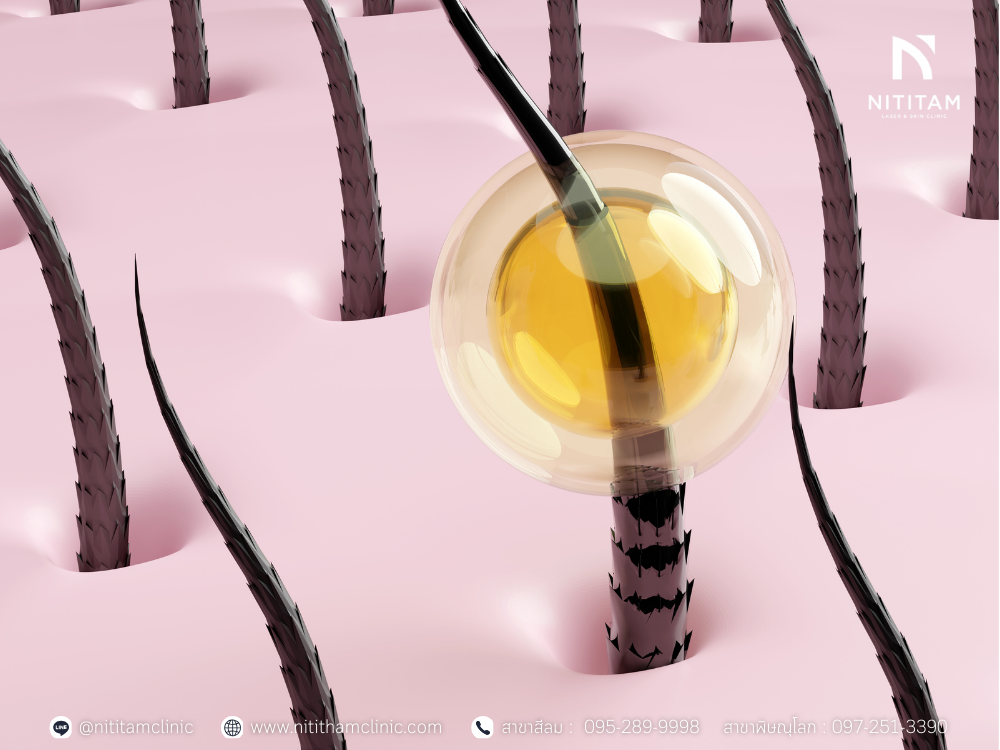
For mothers concerned about excessive hair loss or looking to restore their hair’s condition, there are currently safe and effective medical technologies available to help stimulate the hair roots.
1. Hair Root Restoration with Platelet-Rich Plasma (PRP Therapy)
It is a method to stimulate hair follicle cells using the client’s own blood. The blood is processed through a centrifuge to isolate the “Platelet Rich Plasma” (PRP), which is then injected back into the affected areas of the scalp.
- Advantages: Platelet-rich plasma is rich in essential biological substances that help stimulate the cell repair process and encourage weak hair follicles to exit the resting phase and resume new hair growth. Since it uses the client’s own blood, it is highly safe with no risk of allergic reactions.
2. Low Level Laser Therapy (LLLT)
Low-level laser therapy technology stimulates blood circulation in the scalp, helping to increase oxygen and nutrient delivery to the hair roots. This promotes stronger hair roots and reduces hair loss. The method is popular as it is painless and leaves no wounds after treatment.
3. Hair Vitamin Therapy
This method involves directly delivering essential vitamins and minerals into the scalp to address localized nutritional deficiencies. It helps ensure hair roots receive adequate nourishment, supporting the restoration of thicker and stronger hair.
4. Medication
In some cases, a doctor may consider prescribing topical medications (such as Minoxidil) or vitamin supplements. However, for breastfeeding mothers, it is essential to consult a doctor closely to choose medications that do not affect breast milk and the baby.
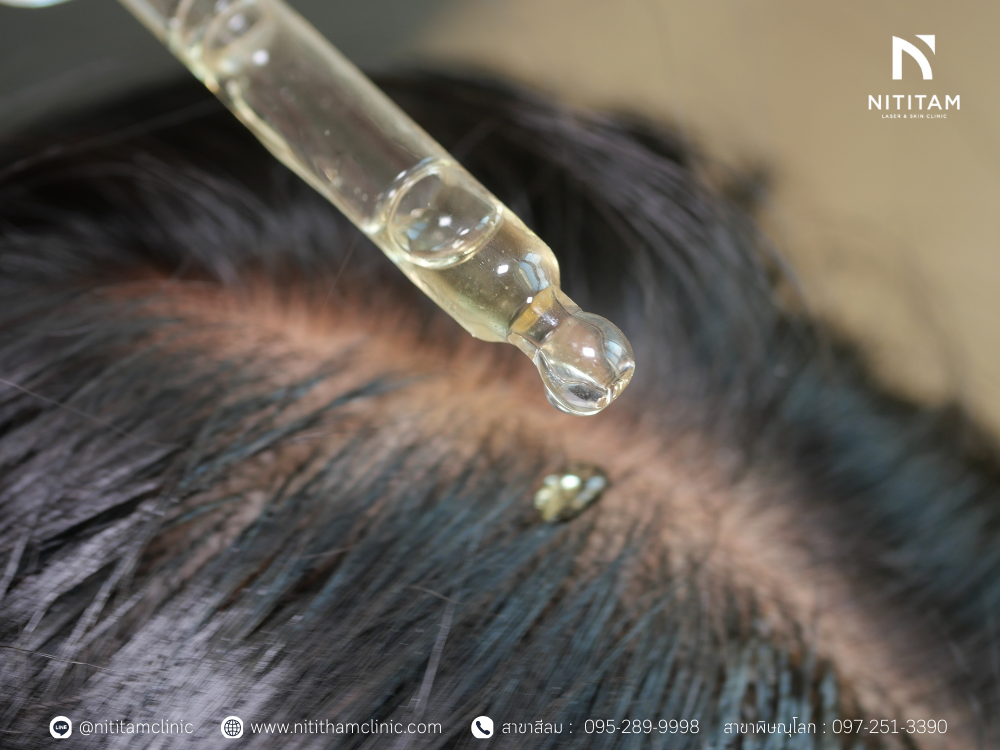
Postpartum hair loss is a natural mechanism caused by hormonal changes and usually improves on its own over time. However, proper care of your hair and scalp health can help reduce the severity of the condition and encourage the hair to return to its healthy, thick state more quickly.
If you are a mother experiencing concerns or unusually excessive hair loss that affects your confidence, Nititham Clinic is ready to provide consultations. We offer thorough hair and scalp analysis to design an appropriate and safe treatment plan by our medical doctors, helping you regain your confidence and restore healthy hair.
Book a doctor’s consultation or inquire for more information.
Nititham Clinic Phitsanulok
Tel: 097-251-3390
LINE: https://lin.ee/mxQAzch
Facebook: Nititham Clinic
Nititham Clinic Bangkok (Silom)Tel: 095-289-9998
LINE: https://lin.ee/kUu8NAt
Facebook: Nititham Clinic, Silom Branch, BTS Sala Daeng