


What Causes Comedones? Whiteheads vs. Blackheads: What is the Difference?
A bothersome skin concern that often hides beneath the surface, causing a bumpy texture when touched, is comedones (clogged pores). Many people try various skincare routines, but the results often fall short of expectations. This article will delve into the root causes of comedones and explain the differences between whiteheads and blackheads from a deep skin physiology perspective, helping you understand and properly manage this condition.

The Real Root Cause: What Causes Comedones?
The mechanism behind comedones is more complex than simply dirt or improper facial cleansing. The starting point of all types of acne is microscopic clogged pores (microcomedones) that are invisible to the naked eye, which are caused by two main interacting factors:
1. Abnormal skin cell turnover
Dead skin cells around the hair follicles do not shed naturally. Instead, they clump together tightly, forming a buildup that clogs the pores.
2. Changes in skin oil composition
Sebum produced by the sebaceous glands in acne-prone individuals often contains low levels of Linoleic Acid, making the oil thicker and more viscous than usual. When this thick oil mixes with dead skin cells, it leads to the formation of clogged pores.
In-Depth Look at the Differences Between Whiteheads and Blackheads
Once a sebum plug forms, it develops into two main types of comedones. These differ in both physical appearance and their formation process, as follows:
Closed Comedones (Whiteheads)
They appear as white or flesh-colored bumps that feel rough to the touch. They are caused by trapped sebum and dead skin cells under a thin layer of skin, where the pore opening is completely closed.
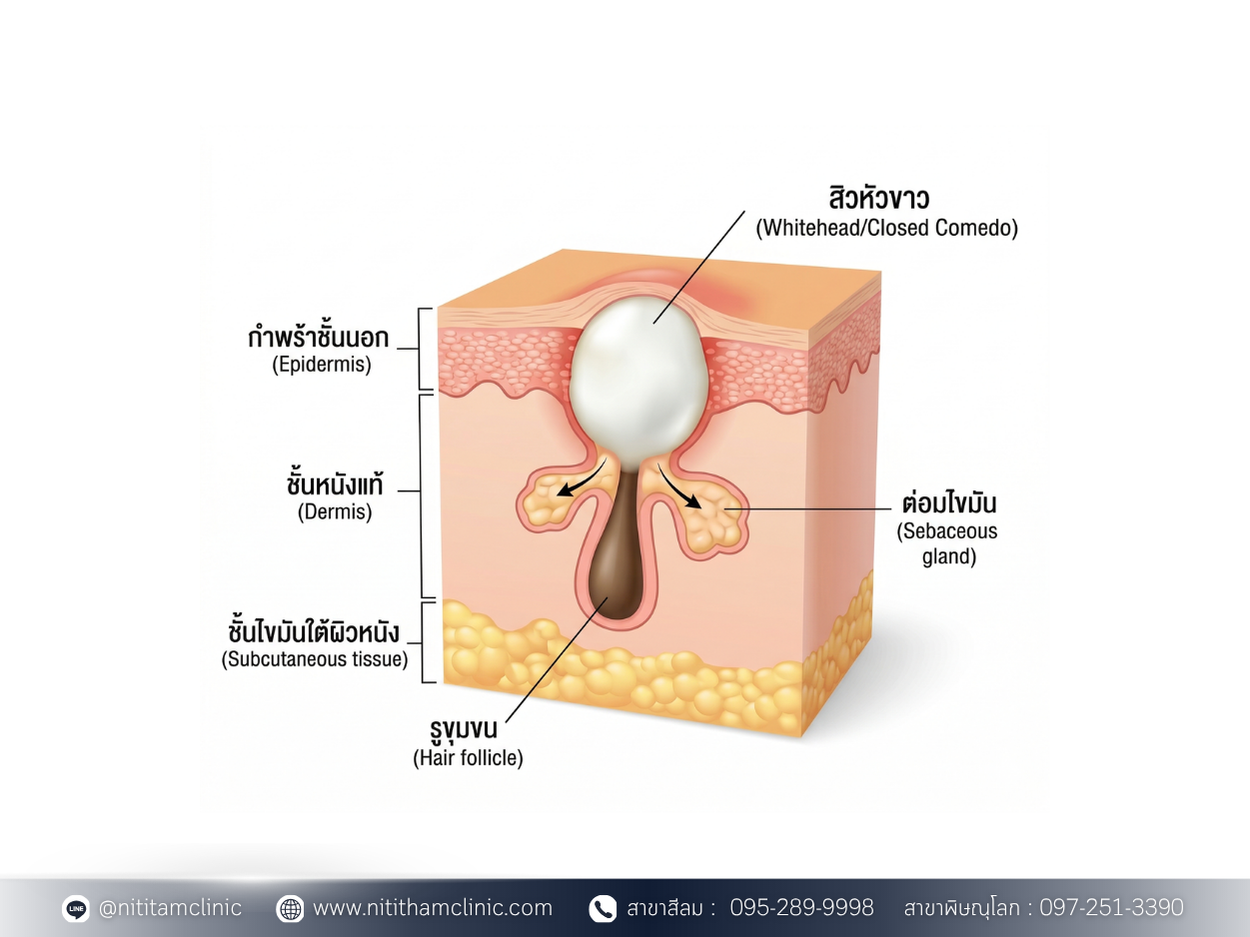
- In-Depth Insights Whiteheads are like ticking time bombs. Their closed, oxygen-deprived environment creates an ideal breeding ground for C. acnes bacteria. If left untreated or squeezed improperly, they can easily develop into inflamed, red, or cystic acne.
Open Comedones or Blackheads
They appear as small black dots within the pores, commonly found on the nose, forehead, or chin. This occurs when a pore opens, exposing the trapped sebum inside to the air.
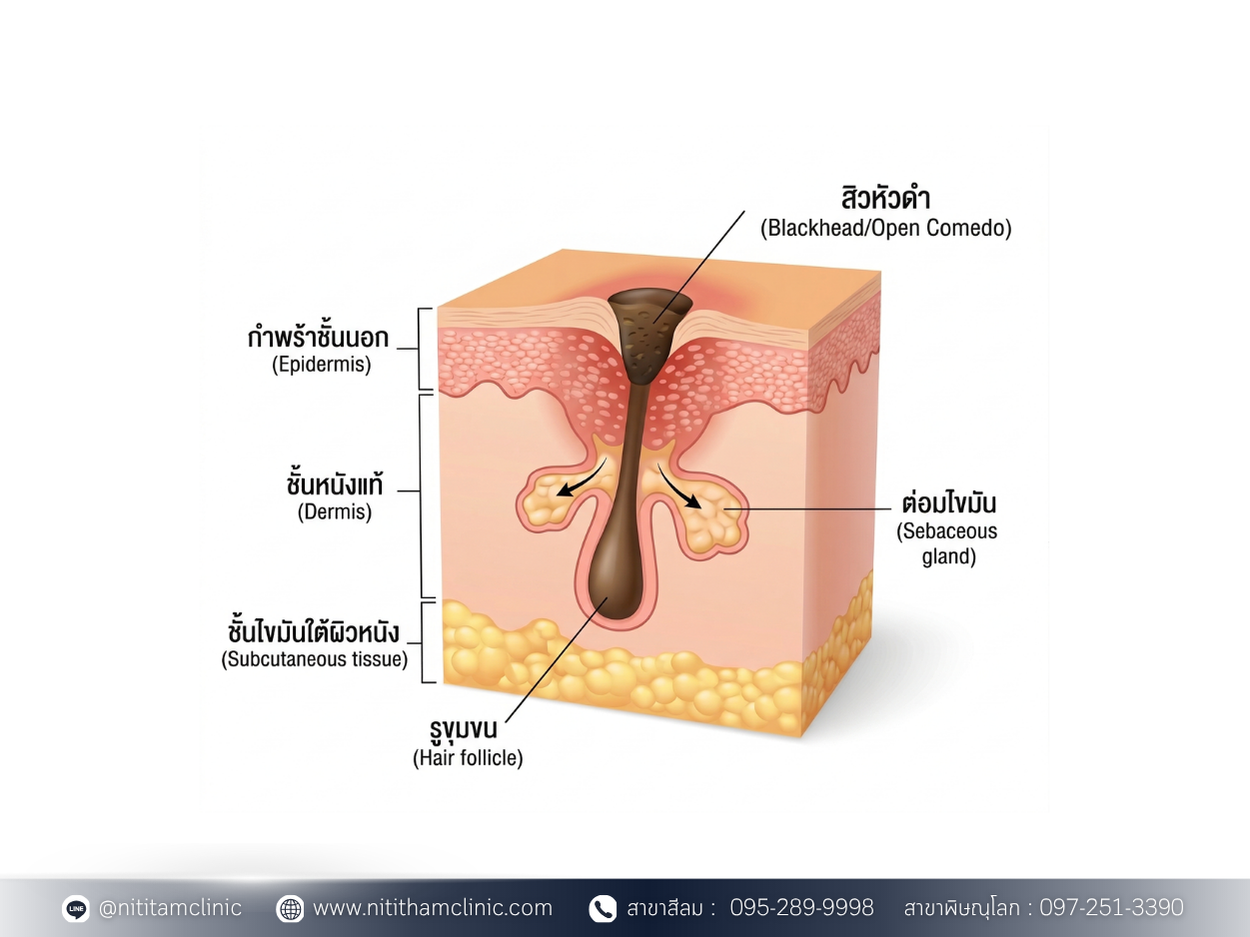
- In-Depth Insights Many people mistakenly believe that black spots are dirt or dust. In reality, the dark color is caused by oxidation. When sebum and melanin within the clogged pore are exposed to oxygen in the air, they turn dark. This type of acne rarely develops into inflammatory acne unless it is disturbed or forcefully squeezed.
Proper Care Guidelines to Reduce the Comedonal Acne Cycle
Avoid squeezing, picking, or popping acne yourself. In addition to causing bruising and scarring, it increases the risk of pushing the comedone deeper into the skin layers, which can trigger severe inflammation. Focus on gentle skincare routines that help balance the skin cell turnover cycle.
Currently, there are medical technologies available to help manage comedonal acne, such as:
- Lhala Peel Program A skincare innovation that gently exfoliates the skin and reduces residual impurities in the pores without causing irritation.
- Hydra Facial Program A deep pore cleansing technology that simultaneously infuses nourishing ingredients into the skin, helping to reduce clogged pores and balance moisture.
Comedonal acne requires understanding and a thorough skin analysis. Nititham Clinic, at both the Phitsanulok and Bangkok (Silom) branches, is ready to provide care and guidance. For more information or to schedule a consultation with a doctor, please contact: Nititham Clinic Ready to treat all skin concerns with care.
Nititham Clinic Phitsanulok
Tel: 097-251-3390
LINE: https://lin.ee/mxQAzch
Nititham Clinic Bangkok (Silom)
Tel: 095-289-9998
LINE: https://lin.ee/kUu8NAt Facebook:Nititham Clinic