


Urinary Incontinence is Nothing to Be Ashamed Of: Seek Treatment Before It’s Too Late
In our daily lives, we eat and drink every day. When we consume food, the body absorbs useful nutrients and excretes waste. The more water you drink, the more frequently you urinate. Proper urination helps keep the body balanced and healthy. However, for some people, this might not be the case because their bodies cannot control the excretory mechanism, resulting in a condition known as urinary incontinence
Symptoms of Urinary Incontinence
Urinary incontinence is an abnormality related to the excretory system. Those with this condition experience involuntary leakage or flow of urine, being unable to control their urination. Urinary incontinence can occur in all genders and ages, but it mostly affects women aged 30 to 40 years and older. Urinary incontinence symptoms can be divided into 3 main groups:
1. Continuous urinary incontinence or leakage Individuals with this symptom experience easy urine leakage even without engaging in any strenuous activities. Leakage can occur just by walking normally, often requiring the regular use of sanitary pads.
2. Urinary incontinence during physical activities Such as lifting heavy objects, playing sports, or even coughing and sneezing. Urine leakage occurs during these activities, but symptoms are usually absent when not performing them.
3. Urine leakage before reaching the toilet or overactive bladder This causes a frequent urge to urinate, and urine often leaks out before reaching the toilet.

Causes of urinary incontinence in women
Urinary incontinence can be caused by several factors, such as accumulated abdominal pressure from coughing, sneezing, and exercising, weakened pelvic floor muscles due to aging, vaginal wall laxity, sagging of the urethra and urethral sphincter, and changes in estrogen levels.
Urinary Incontinence Treatment for Early Symptoms
Treating urinary incontinence for those with mild, early-stage symptoms can be done through lifestyle modifications. These include eating a healthy diet, avoiding alcoholic beverages, drinking enough water daily, urinating on a regular schedule, and regularly performing pelvic floor exercises. However, if urinary incontinence has been present for a long time or symptoms are severe, it is recommended to seek medical innovation treatments at a hospital or clinic.
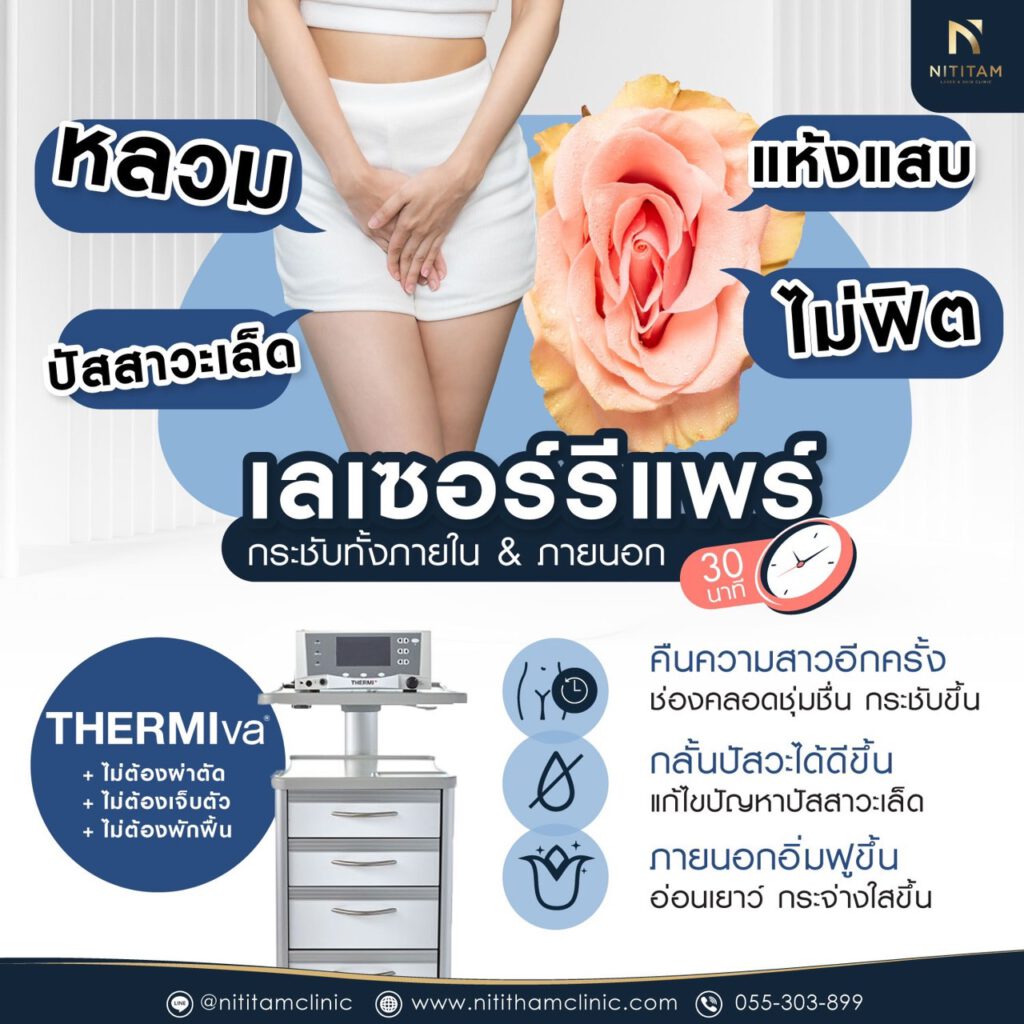
Safe, Non-Surgical Urinary Incontinence Treatment with THERMIva
Safe and effective treatment for urinary incontinence can be achieved withTHERMIva vaginal tightening innovation for treating urinary incontinence Utilizing radiofrequency energy to stimulate collagen and elastin production in the tissue layer, this non-surgical treatment helps restore and tighten the vaginal area. It aids in rehabilitating the vaginal and pelvic floor muscles. Improvements may be noticed after the first session. A continuous treatment of at least 2 – 3 sessions is recommended for optimal vaginal tightening. Results typically last 6 – 12 months. It effectively addresses urinary incontinence, helping to reduce or resolve the symptoms of involuntary urine leakage.
Maintaining good health requires consistent self-care. If you experience urinary incontinence or an inability to control urination, it is highly recommended to consult a doctor promptly for proper and appropriate treatment. This condition should not be ignored, as urinary incontinence significantly impacts your quality of life, affecting both physical and mental well-being. At Nititham Clinic, we offer vaginal tightening services using the THERMIva innovation to help address urinary incontinence safely and effectively. Every case is consulted, treated, and closely monitored by a medical doctor.
For more information or to book a consultation with a doctor, please contact:
Nititham Clinic Phitsanulok
Tel: 055-303899, 097-251-3390
Line: @nitithamclinic
Facebook: Nititham Clinic