


Stress-Induced Hair Loss
In the world of hair health care, hair loss is a problem many people face. However, not all types of hair loss are the same. This article will delve into stress-induced hair loss, or Telogen effluvium, which is a common cause of hair loss that many people may not fully understand.
What is Telogen effluvium?
Telogen effluvium is a temporary hair loss condition that occurs when certain triggering factors disrupt the hair growth cycle. Normally, hair has three main life cycle phases:
- Anagen (Growth Phase): The phase where hair grows and lengthens, which is the longest phase (approximately 2-7 years).
- Catagen (Transition Phase): A short phase where the hair follicle begins to shrink (approximately 2-3 weeks).
- Telogen (Resting Phase): The phase where hair is ready to fall out to make way for new hair growth (approximately 3 months).
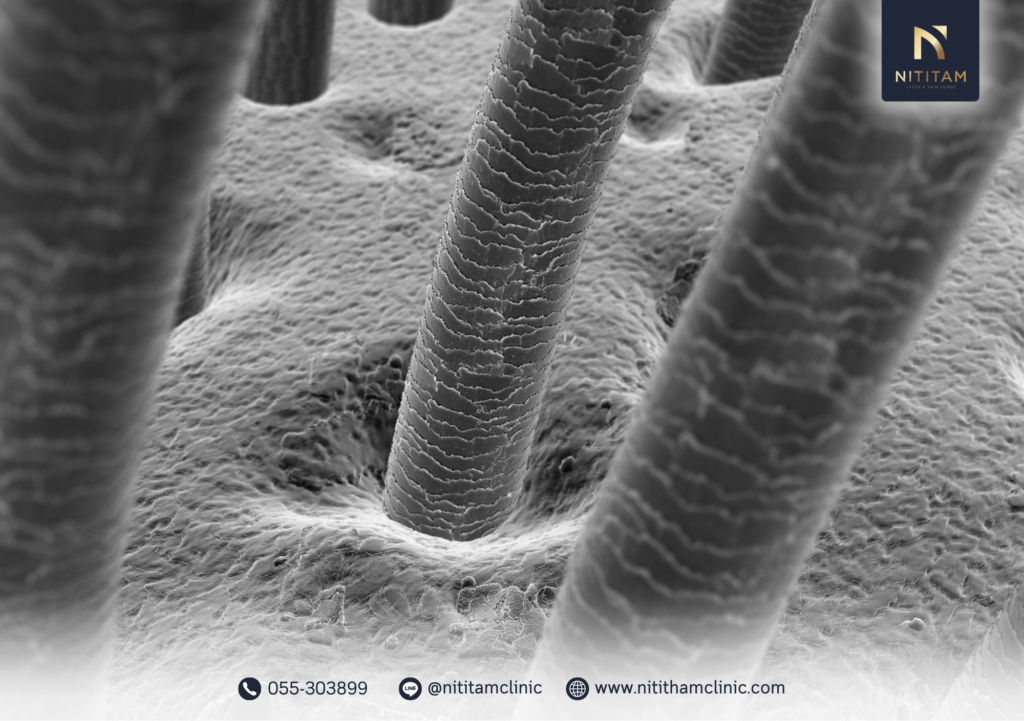
When the body experiences stress, whether physical or emotional, it causes a large number of hairs to prematurely enter the Telogen phase from the Anagen phase simultaneously. As a result, about 2-3 months later, those hairs in the Telogen phase will shed suddenly and in greater amounts than usual.
Main causes that trigger Telogen effluvium
This type of hair loss usually stems from significant events that cause stress to the body, such as:
- Physical stress: Severe illness, major surgery, high fever, significant blood loss, or childbirth.
- Psychological stress: The loss of a loved one, overworking, or depression.
- Hormonal changes: Pregnancy, childbirth, or discontinuing birth control pills.
- Nutritional deficiencies: Rapid weight loss or a lack of essential vitamins and minerals such as iron, protein, or zinc.
- Side effects from certain medications: Antidepressants, blood pressure medications, or chemotherapy.
Symptoms and diagnosis
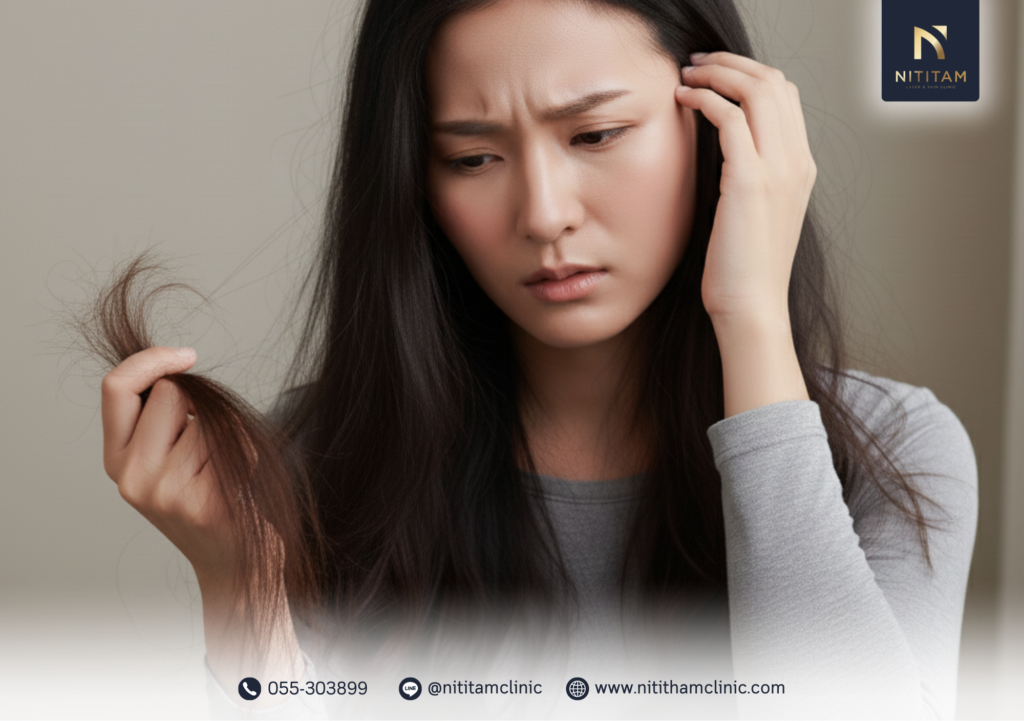
The most noticeable symptom is significant daily hair loss, which may exceed 100-200 hairs per day, especially during washing or combing. Patients may notice overall hair thinning across the scalp, but the scalp itself will not show signs of inflammation or redness like other skin conditions. Importantly, this condition typically occurs about 2-3 months after a triggering event, which corresponds to the natural hair growth cycle.
Diagnosis of this condition involves a doctor taking a detailed medical history regarding significant events over the past 2-3 months. A physical examination may also be conducted to assess hair density, or a gentle hair pull test may be performed to check for abnormal hair shedding.
Care and Treatment Guidelines
The good news is that Telogen effluvium is a temporary hair loss condition and can recover on its own once the body returns to its normal state. The primary treatment therefore focuses on self-care and addressing the root cause of the problem:
- Manage stress: If stress is the underlying cause, consider relaxation techniques such as exercise, meditation, or consulting a professional.
- Improve nutrition: Consume a balanced and nutritious diet, particularly foods rich in protein, iron, zinc, and essential vitamins.
- Maintain overall health: Ensure adequate rest and keep your body healthy.
- Consult a doctor: If hair loss remains severe or does not improve, consult a dermatologist to determine the exact cause and discuss appropriate treatments, such as taking vitamin supplements or using hair care products designed to nourish the hair roots.
Conclusion
Telogen effluvium is not a cause for excessive concern, as it typically resolves on its own once the triggering factors are removed. Understanding the underlying causes and allowing your body time to recover are key to helping your hair regain its thickness and strength.
If you are experiencing hair loss that appears to be linked to stress or significant life events, understanding and acknowledging the condition is the crucial first step.
Nititham Clinic Phitsanulok
Tel: 055-303899, 097-251-3390
Line: https://lin.ee/mxQAzch
Facebook: Nititham Clinic
Nititham Clinic Bangkok (Silom)
Tel: 095-289-9998
Line: https://lin.ee/kUu8NAt
Facebook: Nititham Clinic, Silom Branch, BTS Sala Daeng