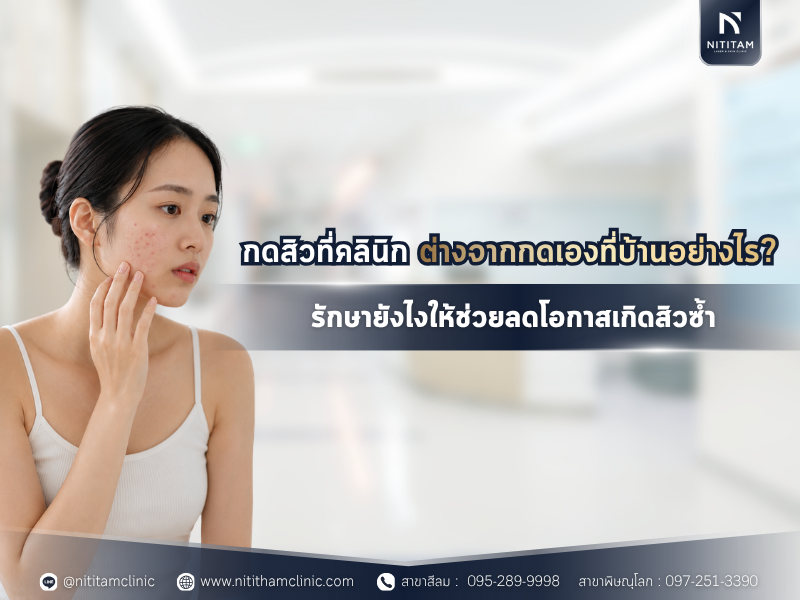



Skin Purging vs. Allergic Reaction: How to Tell the Difference? Signs to Know Before Stopping Acne Treatment
When starting a new acne medication or cream, your skin might worsen, with more breakouts, redness, or irritation. Many people decide to stop using the product immediately, assuming they are having an allergic reaction.
In reality, skin worsening during the initial phase of acne treatment does not always indicate an allergy. Sometimes, it is “skin purging,” a sign that the treatment is working. Stopping abruptly may cause you to miss the opportunity for your skin to improve.
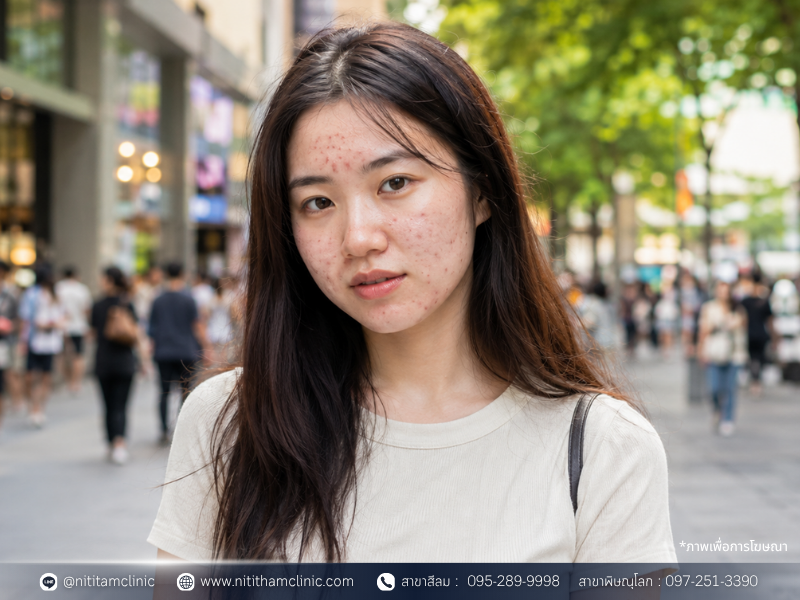
What is skin purging? How does it occur?
Skin purging is a reaction where the skin responds to certain ingredients in acne treatment products, especially those that accelerate the skin cell turnover process.
When the cell turnover cycle speeds up, hidden acne beneath the skin that hasn’t naturally surfaced is pushed out simultaneously in a short period. This makes it appear as though there is a sudden increase in breakouts, when in fact, it is pre-existing acne from under the skin.
Ingredients that commonly cause skin purging
- Retinol and Retinoids
- AHAs such as Glycolic Acid and Lactic Acid
- BHAs such as Salicylic Acid
- Benzoyl Peroxide
- Prescription topical acne medications such as Tretinoin
These ingredients work by accelerating skin cell turnover, reducing clogged pores, and helping to decrease inflammation in the long term. However, during the first week, the skin may appear worse initially.
Skin Purging vs. Allergic Reactions: How to Tell the Difference?
The most distinct differences lie in the location of the breakouts, the characteristics of the symptoms, the duration, and the sensation on the skin.
| Comparison Factors | Skin purging | Allergic reaction |
| Acne locations | Usual acne-prone areas | May occur in areas previously unaffected by acne |
| Acne characteristics | Pustules, closed comedones, and small pimples | Red rashes, clear blisters, peeling skin, and swelling |
| Associated symptoms | Mild dryness and slight peeling may occur. | Itching, stinging, burning sensation, and facial redness and swelling. |
| Duration | Typically improves within 4-6 weeks. | Persists or worsens even after discontinuing use |
| Skin sensation | Mild or no skin discomfort | Noticeable itching, burning, or irritation |
| Response upon discontinuation | Breakouts may continue for a short period | Symptoms usually improve after stopping use |
Clear signs of skin purging, not an allergic reaction
There are 5 main signs indicating that what you are experiencing is skin purging.
1. Breakouts occur in areas where you usually get acne.
Skin purging does not spread to new areas. The new breakouts typically appear in the same zones where you regularly experience acne problems, such as the chin, forehead, or cheeks.
2. The type of acne looks similar to your usual breakouts.
Purging usually presents as small pustules, whiteheads, or blackheads, rather than the red rashes or clear blisters typical of an allergic reaction.
3. No itching or burning sensation
Skin experiencing purging may become slightly dry or flaky, but it will not feel itchy, stinging, or burning. If you experience these sensations, it may not be a skin purge.
4. Starts to improve within 4-6 weeks
Skin purging has a limited duration. If you continue using the product and breakouts gradually decrease after 4-6 weeks, it is a good sign that you are on the right track.
5. Starts after switching to products with exfoliating ingredients.
If breakouts begin after starting Retinol, AHA, BHA, or prescribed acne medications, there is a high chance it is skin purging.
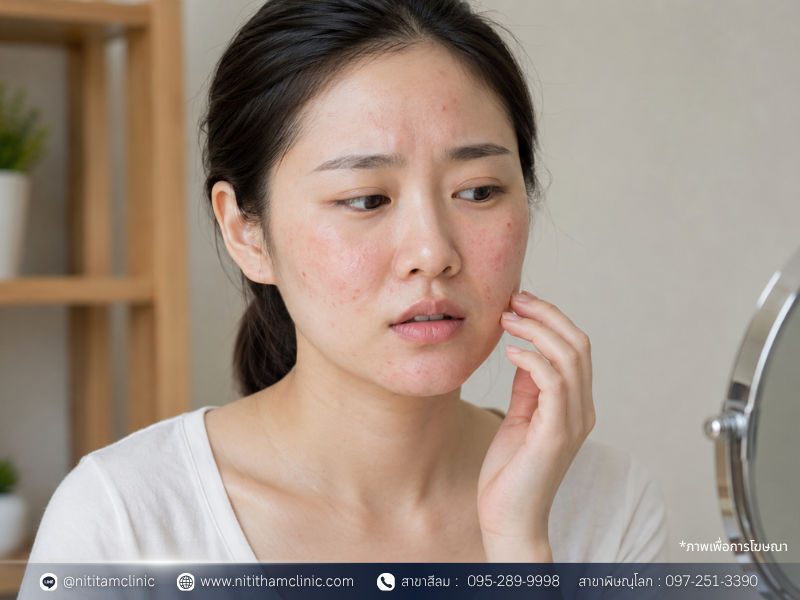
Clear signs of an allergic reaction; discontinue use immediately.
On the other hand, the following signs indicate an allergic skin reaction, and discontinuing use is the right course of action.
Signs that require immediate discontinuation
- Widespread red rash in the applied area, especially if it continues to spread.
- Severe itching, stinging, or a distinct burning sensation immediately after application.
- Skin swelling, especially around the eyes or lips
- Clear blisters or peeling skin
- Symptoms do not improve even after stopping the product for several days
Signs that require immediate medical attention
- Severe facial swelling, difficulty breathing, or other accompanying physical symptoms, which may indicate a severe allergic reaction.
- Symptoms do not improve within 48-72 hours after discontinuing the product.
If you are unsure, it is not recommended to decide on your own whether to stop or continue use.
There are several situations where it is difficult to clearly distinguish between skin purging and an allergic reaction, especially
- Already have sensitive and reactive skin.
- Using high-concentration prescription acne medications, such as Tretinoin 0.05% or higher.
- Having underlying skin conditions, such as Rosacea or Eczema.
- Starting multiple products at the same time, making it difficult to identify the cause.
In these cases, self-diagnosing might lead you to stop using a product that is actually working, or conversely, continue using it when your skin is truly experiencing an allergic reaction.
Skin purging and allergic reactions can look similar in some ways, but they differ significantly in terms of location, skin sensation, and duration. Discontinuing a product abruptly without knowing whether it is purging or an allergy may cause you to miss the opportunity for your skin to recover and improve.
If you are unsure, consulting a doctor for a proper diagnosis before deciding to stop or switch products is the best way to minimize risks to your skin. Book an appointment or inquire for more information at:
📍 Nititham Clinic, Phitsanulok Branch
- Tel: 097-251-3390
- LINE: https://lin.ee/mxQAzch
📍 Nititham Clinic, Bangkok Branch (Silom)
- Tel: 095-289-9998
- LINE: https://lin.ee/kUu8NAt
Follow us for news and promotions:
- Facebook: Nititham Clinic