


Unlocking the Secret: From Acne to Acne Scars – How Does It Happen and What Are the Causes?
Acne may heal, but what often follows are “acne scars” These scars leave the skin uneven, textured, and indented, significantly reducing self-confidence. This article will uncover the secret of why ordinary breakouts turn into acne scars, explore the underlying causes, and explain how to prevent them.
What is Acne?
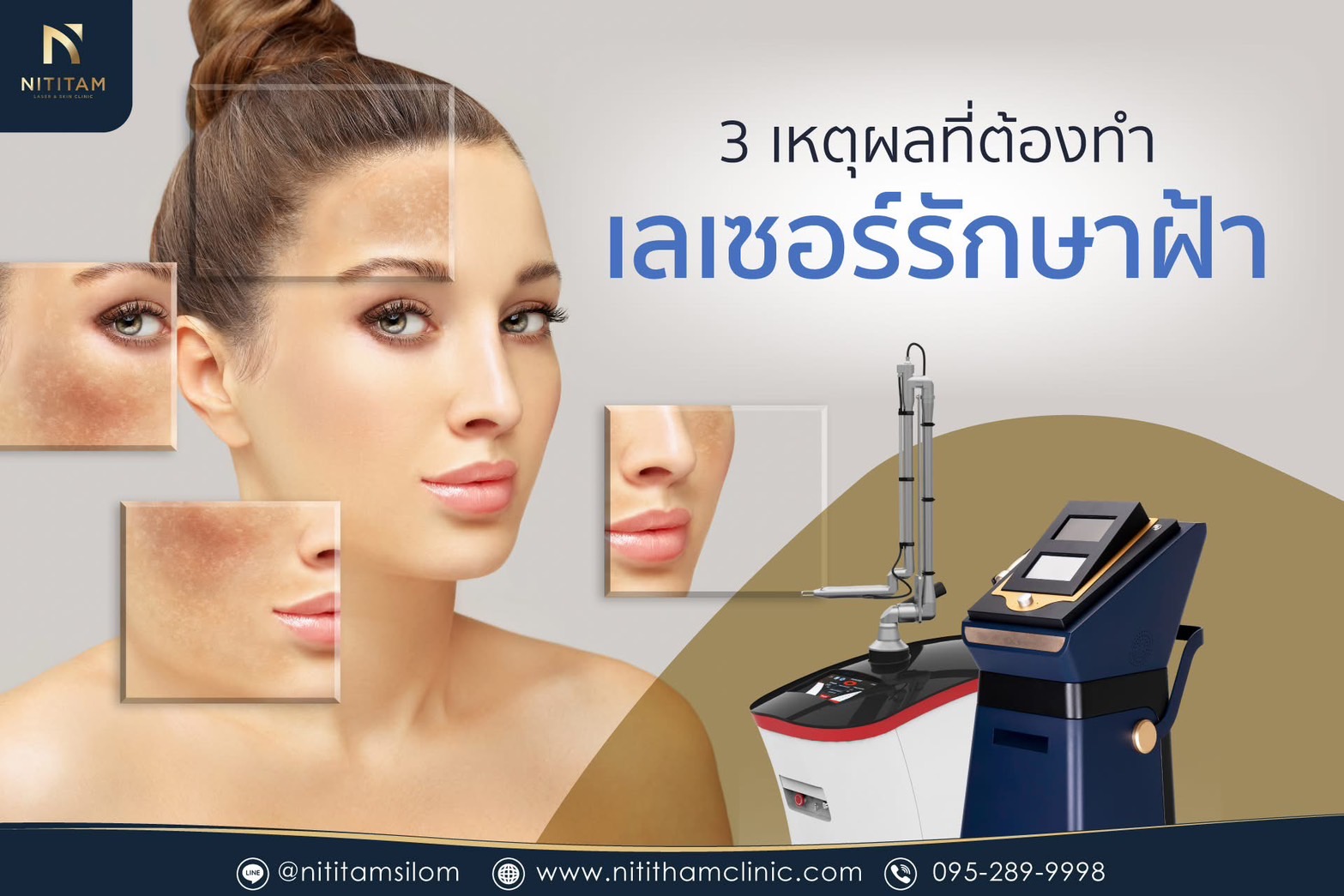
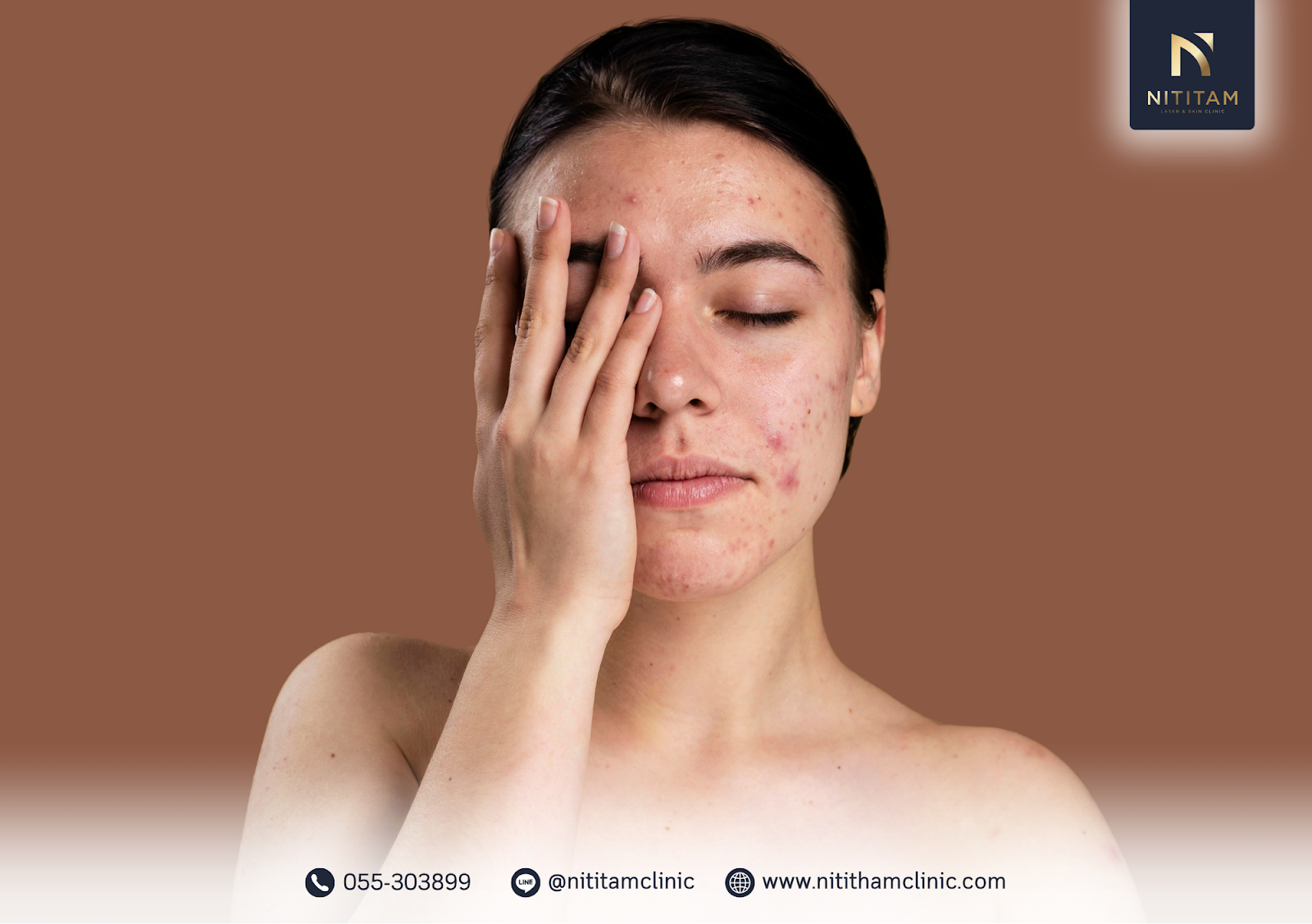
Acne is caused by the clogging of pores with excess sebum, dead skin cells, and impurities. When a blockage occurs, bacteria can cause inflammation, resulting in comedones, pustules, or inflammatory acne. If not treated correctly or cared for properly, it may leave marks on the skin in the form of “redness, dark spots, and acne scars”
How Do Acne Scars Form?
Acne scars are caused by incomplete skin repair. When inflammatory acne extends deep into the dermis layer, the body attempts to repair itself by producing new collagen. However, if insufficient collagen is produced, it results in depressions or deep grooves, commonly known as “pitted acne scars”
Main causes of pitted acne scars
- Severe inflammatory acne
Highly inflamed acne, such as cystic acne and large pustules, can severely damage skin tissue. - Improperly squeezing or picking acne
Squeezing acne with unclean hands or tools can worsen inflammation, lead to infection, and damage surrounding tissues. - Repeated inflammation
Recurring acne in the same area weakens the surrounding tissue and impairs its ability to repair itself. - Improper acne wound care
After a pimple dries or heals, it is important to keep the area moisturized and protected from the sun. If the skin becomes too dry or further inflamed, it can lead to pitted acne scars.
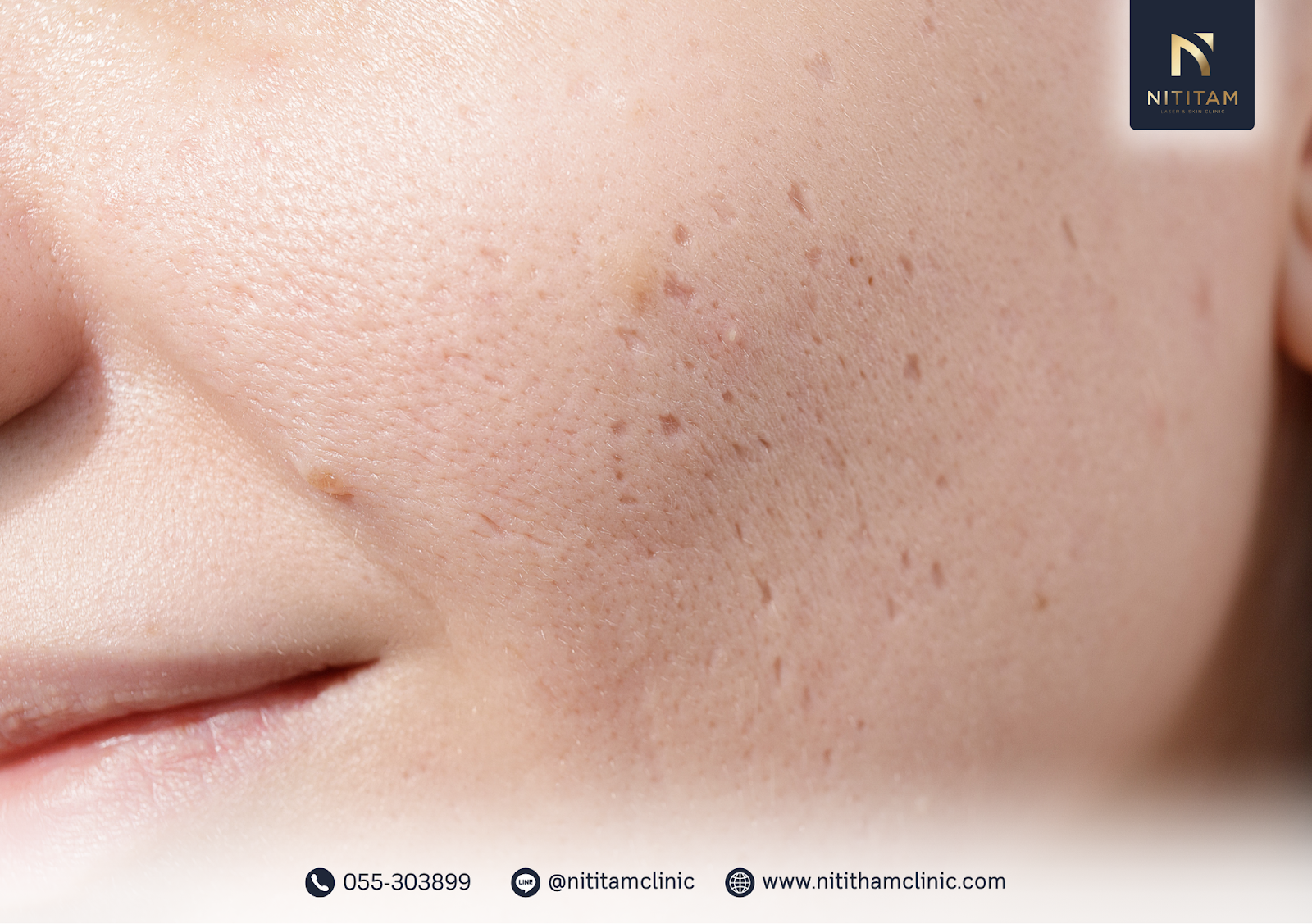
How to prevent acne from turning into pitted scars
- Treat acne in its early stages to prevent further inflammation.
- Avoid picking or squeezing acne yourself.
- Keep acne spots clean and moisturized.
- Consult a doctor if acne shows signs of severe inflammation.
Can acne scars be treated?
Currently, there are several methods available to help reduce scar depth and promote a smoother skin appearance, such as:
- Collagen-Stimulating Lasers
- Dermal filler injections to fill indented scars
- Microneedling (using tiny needles to stimulate the skin)
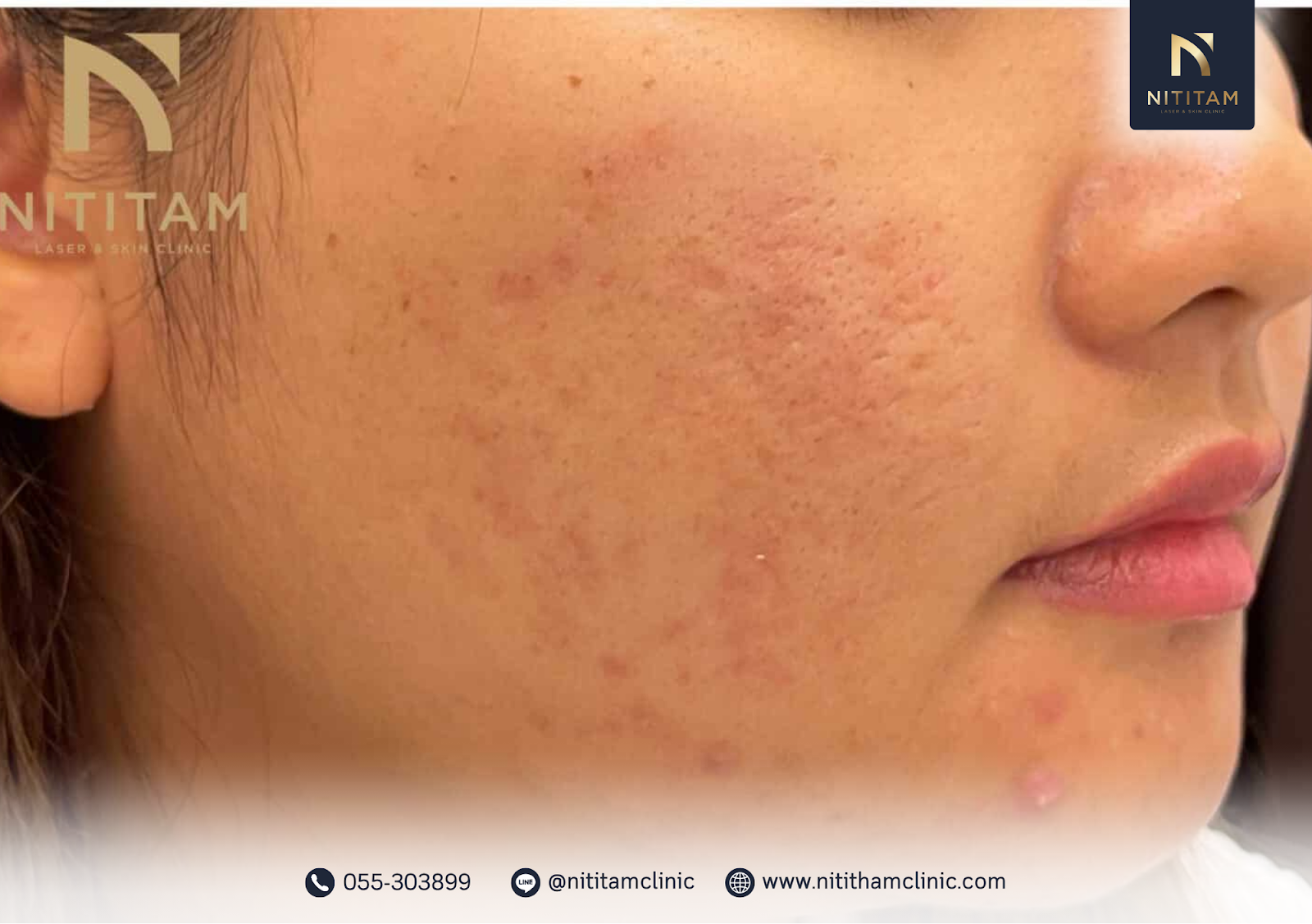
Acne Scar Treatment at Nititham Clinic
Nititham Clinic Specializes in acne scar treatment using advanced and safe laser technology, certified by the FDA in several regions, including the United States, Europe, and Thailand.
Laser Technology Used for Acne Scar Treatment
- e-Matrix A laser treatment that stimulates collagen production in the skin layer to help restore skin damaged by acne scars and other scarring.
- eTwo Combines Sublime and Sublative technologies to help treat acne scars, restore skin smoothness, and tighten pores.
- Sylfirm X Plus A treatment utilizing RF Micro-Needling technology to effectively stimulate collagen and elastin production in the skin layer. It is suitable for reducing the appearance of acne scars, redness, and uneven skin texture.
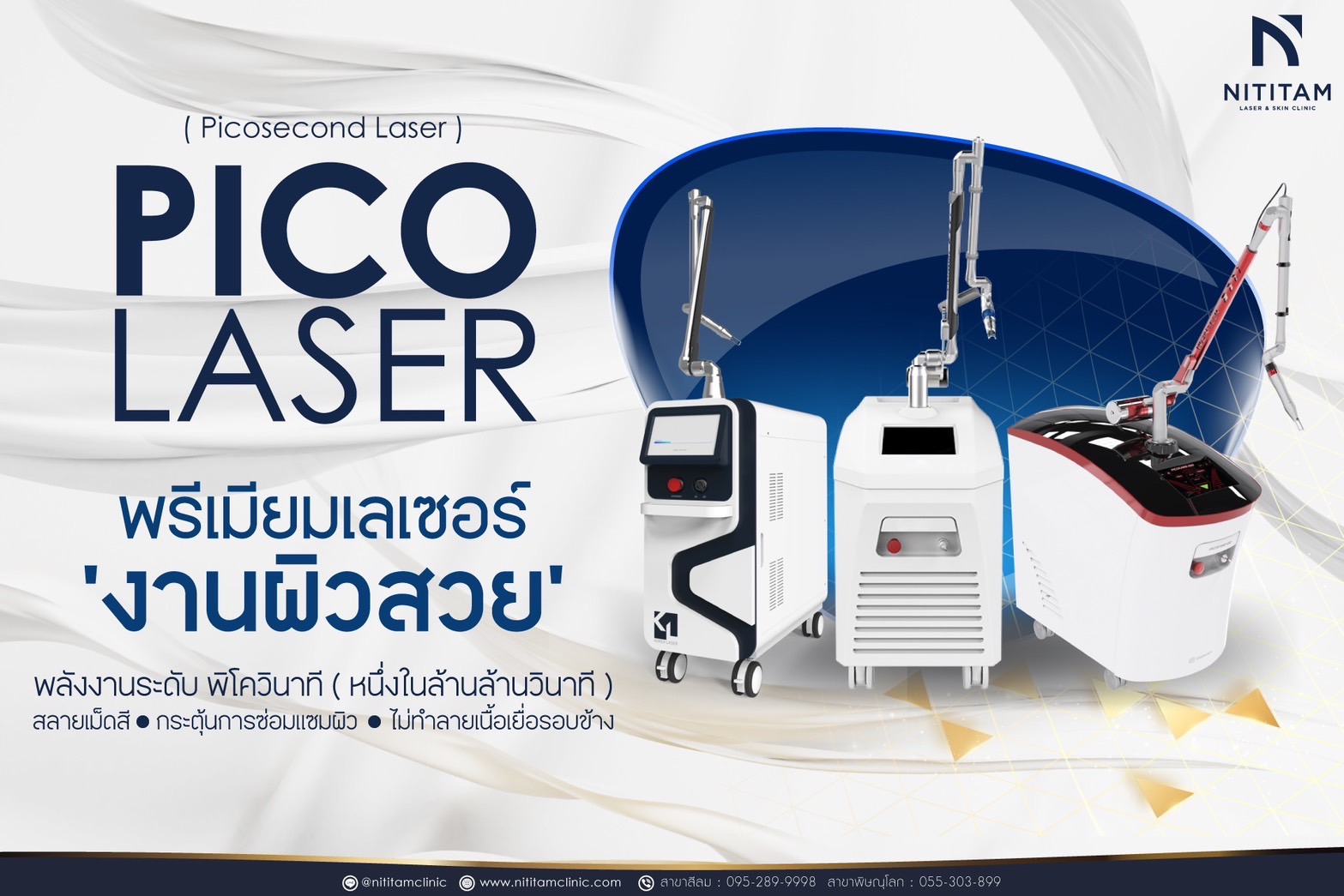
- PicoCare A laser that emits energy in ultra-short pulses, helping to improve pigmentation, reduce dark spots, and enhance skin smoothness.
- 3DEEP by Endymed Utilizes RF (Radio Frequency) energy to stimulate new collagen production and reorganize existing collagen, reducing sagging on the face and neck.
Treatment Procedure
- Skin Assessment The doctor will assess the client’s skin condition and acne scar concerns to develop an appropriate treatment plan.
- Laser Treatment Select the appropriate laser technology tailored to the patient’s skin condition and specific concerns to achieve optimal results.
- Post-treatment care The doctor will provide post-treatment skin care instructions, such as avoiding sun exposure, using suitable skincare products, and scheduling follow-up appointments.
For more information or to book a consultation with a doctor, please contact:
Nititham Clinic Phitsanulok
Tel: 055-303899, 097-251-3390
Line: https://lin.ee/mxQAzch
Facebook: Nititham ClinicNititham Clinic Bangkok (Silom)
Tel: 095-289-9998
Line: https://lin.ee/kUu8NAt
Facebook: Nititham Clinic, Silom Branch, BTS Sala Daeng